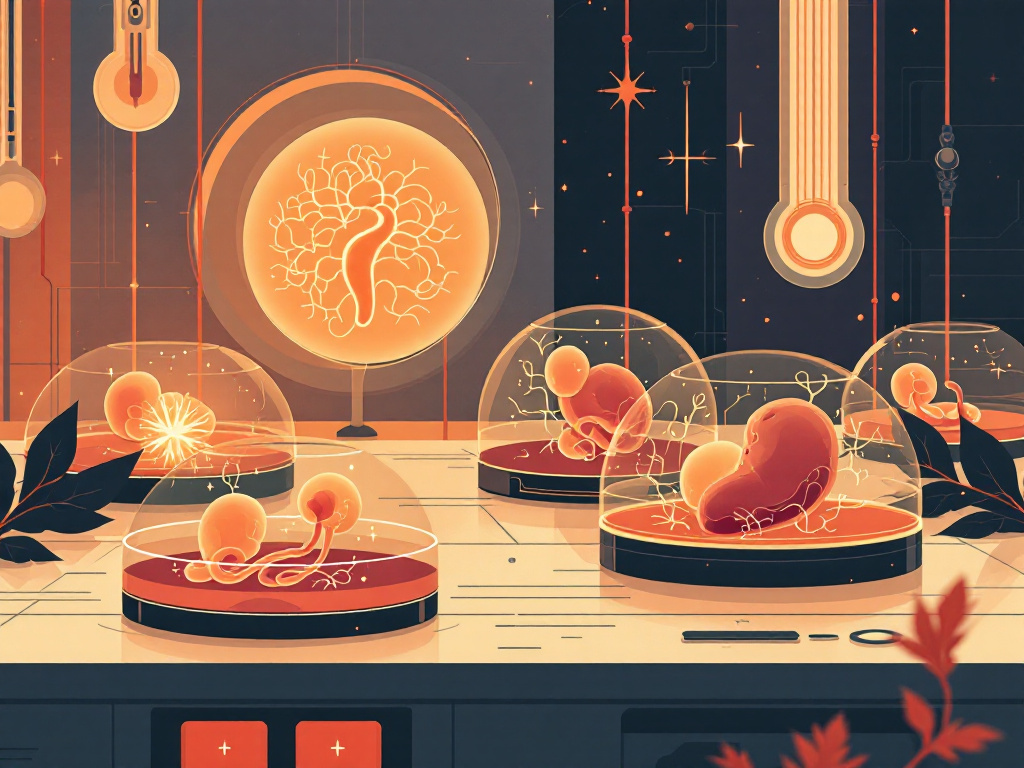
René Frydman admits: commercializing the body means commercializing everything.
IntelligencesMembers only Jun 23, 20262Add to bookmarks
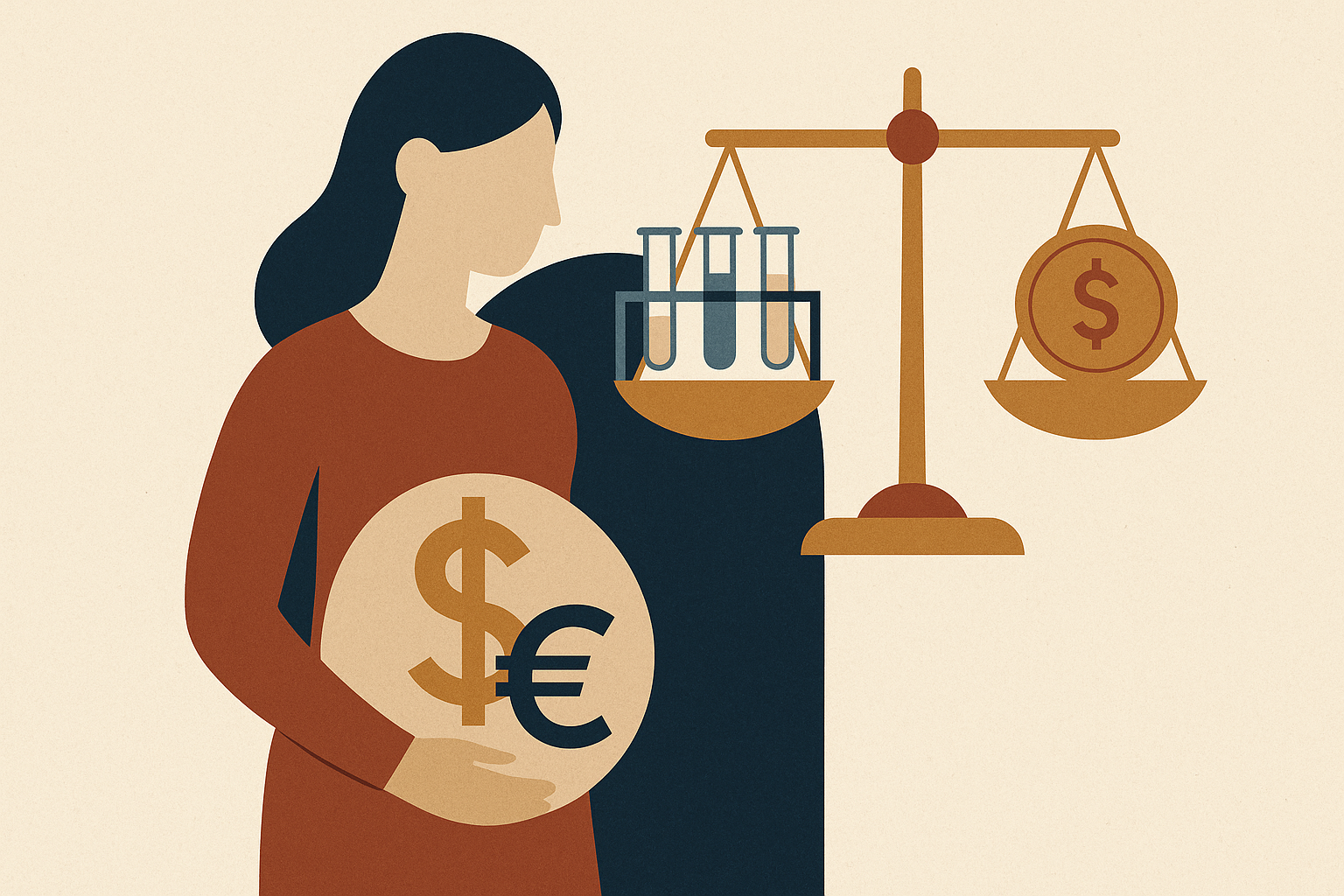
The pioneer of in vitro fertilization in France has spoken out against commercial surrogacy. His philosophical warning goes far beyond the debate on surrogacy: it is the logic of the commodification of life itself that is at stake.
Context
On June 15, 2026, a symposium co-organized by the think tank Meta Nova and the Casablanca Declaration was held at the Senate on the theme "Surrogacy: Ethical, Legal, and Political Issues for France." Commercial surrogacy is prohibited in France. Children born through foreign surrogacy are regularly recognized by French courts, creating a de facto situation of jurisprudential tolerance.
The Facts
Professor René Frydman, a pioneer of medically assisted reproduction in France and the architect of the birth of the first French test-tube baby in 1982, spoke at this symposium. His statement is direct: "The principle of commercializing the body opens the door to the commercialization of everything."
Frydman is neither a pro-life activist nor a theologian. He is an initiator who identifies a limit that his own practice has helped to shift. His testimony carries weight that proponents of the status quo cannot ignore.
Doctrinal Analysis
The Congregation for the Doctrine of the Faith, in the instruction Donum Vitae (1987), states that reproductive techniques involving third parties undermine the dignity of the human person and the unity of marriage. The Declaration Dignitas Infinita by the Dicastery for the Doctrine of the Faith (2024, no. 51) explicitly describes surrogacy as a "grave violation of the dignity of the woman and the child."
Thomistic realism formulates the argument in metaphysical terms: the dignity of the person is an ontological property, not a contractual one. It cannot be ceded, even voluntarily, because it does not belong to the order of what is owned and transferred. The argument of bodily autonomy assumes that the body would be a disposable property like any other good. Yet the body is not what I possess: it is what I am.
Challenges for the Church and the Faithful
Frydman identifies the precise moment when reproductive medicine shifts: from assisting infertile couples to an industry of manufacturing children on demand. The distinction is real. It raises the question of what a child is—a gift or a product—and what a woman is—a person or a service provider.
This shift did not begin with surrogacy. It started with the implicit premises of heterologous ART. Frydman implicitly acknowledges this: the shift in medical purpose follows a continuous logic that he himself helped set in motion.
Critical Reading and Blind Spots
The main weakness of secular opposition to commercial surrogacy is its inconsistency: accepting heterologous ART (gamete donation) while rejecting commercial surrogacy amounts to a distinction of degree, not of kind, unless one relies on a fundamental anthropological argument.
This is precisely the contribution of the Catholic perspective: the argument of intrinsic dignity goes beyond "it’s uncomfortable" to ask what a person is and what filiation means. Without this foundation, opposition to commercial surrogacy lacks a coherent philosophical basis.
To Reflect and Act
René Frydman has not adopted the Catholic vision of the person. But he has taken a rare step in the French bioethical debate: the self-criticism of an initiator. This is an opportunity that Catholics engaged in this debate should seize with intelligence—not to instrumentalize his words, but to show that the refusal to commercialize the human body is an intuition accessible to any person of good will.
The political question that follows is concrete: will France regulate ART and international surrogacy, or let the global market dictate practices? The answer also depends on the ability of Catholics to bring this argument into the public sphere with the rigor it deserves.
The principle of commercializing the body opens the door to the commercialization of everything.
Content reserved for members
Create a free account to access all our content and the weekly review.

Comments (2)
Sign in to join the discussion.
Bénédicte77 Seed23 Jun 2026 · 16:01
C’est vrai qu’il a raison sur le fond, mais c’est un peu facile de s’indigner maintenant alors qu’on a laissé faire pour d’autres marchés bien plus gros. La logique est la même depuis longtemps.

le_veilleur Seed23 Jun 2026 · 13:03
Saint Paul disait que le corps est un temple. Quand on fait du ventre des femmes un commerce, c'est toute la dignité humaine qui trinque.
Story timeline
Misoprostol seul et Jérôme Lejeune : deux visions de l'homme face à face
- 1Misoprostol seul et Jérôme Lejeune : deux visions de l'homme face à face23/06/2026
- 2René Frydman l'admet : commercialiser le corps, c'est tout commercialiser23/06/2026
- 3GPA : une coalition d'États porte à l'ONU l'appel à un moratoire mondial en vue de l'abolition25/06/2026
- 4Léon XIV et Jérôme Lejeune : "La valeur de la personne ne dépend pas de ce qu'elle réalise"25/06/2026
- 5PMA : l'Académie de médecine contre l'importation de gamètes, ou quand la raison rejoint le magistère25/06/2026
- 6Embryoïdes avec chambre cardiaque : jusqu'où ira la science sans l'homme ?29/06/2026