USA-Iran Agreement: Protocol Signed, Hormuz Opened Then Closed Again, Christians Await
MondeMembers only Jun 23, 20264Add to bookmarks
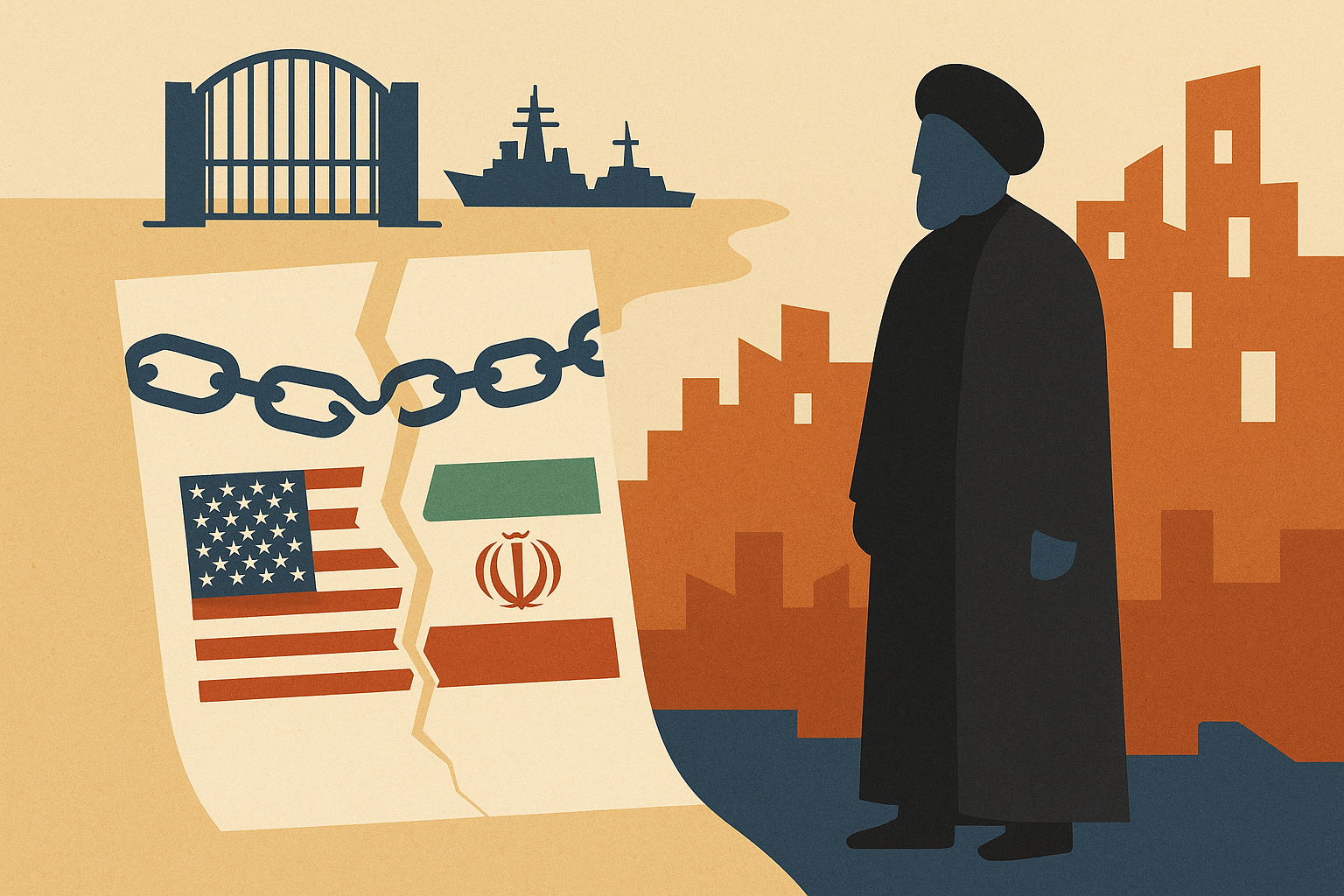
On June 18, Trump and Tehran signed the 14-point protocol. Hormuz was supposed to reopen. On June 20, Iran closed the strait again. Over 4,000 dead in Lebanon since the start of the conflict. Cardinal Pizzaballa remains on site and says: "I will not abandon you."
Verified Facts
On June 18, 2026, Presidents Donald Trump and Massoud Pezeshkian remotely signed the 14-point memorandum of understanding to end the war in the Middle East. Trump had stated on June 16 that the Strait of Hormuz would be "completely open" by Friday.
On June 20, Iran announced the closure of the Strait of Hormuz. The reason given: Israel was not respecting the ceasefire in Lebanon. An official Lebanese toll counted over 4,000 deaths since the start of the war.
Cardinal Pierbattista Pizzaballa, Latin Patriarch of Jerusalem, maintained his presence in Jerusalem. In his pastoral interventions, he reaffirmed his refusal to abandon his flock at the heart of the conflict. His stance is that of a shepherd who remains when diplomacies withdraw.
Pope Leo XIV declared on June 16 that "the agreement between the United States and Iran must lead to the end of the war."
Analysis of Underlying Issues
Forty-eight hours. That is how long it took to go from the triumphant signing of the Hormuz agreement to its closure. The 14-point agreement is real on paper. Its implementation depends on conditions on the ground that none of the signatories fully control.
The logic of the "deal" in the American style: sign quickly, display success, impose reality afterward. Iran signed under economic and military pressure. Israel did not stop its strikes in Lebanon. The pieces do not fit together.
For the Maronite Christians of Lebanon and the Catholics of Gaza, this zigzag diplomacy produces a concrete reality: humanitarian corridors do not open, families remain separated, churches are empty or damaged. These communities are absent from peace communiqués.
Missiological Insight
Cardinal Pizzaballa embodies something that diplomatic texts do not convey: the permanence of the Church. States negotiate and withdraw according to their interests. The Church remains. Its pastoral promise is not conditional on the state of the Strait of Hormuz.
Aide à l'Église en Détresse (AED) has been documenting for years the situation of Christians in Lebanon, Iraq, and Gaza. These communities survive not because diplomacy protects them, but because they cling to their faith, their roots, and the presence of shepherds who refuse to leave.
In its statement of June 17, the Holy See called for a "culture of negotiation." This is not an alternative to the American-Iranian agreement. It is a fundamental requirement: lasting peace is not signed. It is built, slowly, in truth.
Food for Thought for the Reader
The true indicator of stability in the Middle East will not be the state of the Strait of Hormuz. It will be the state of the churches in Gaza, Beirut, and Baghdad. It will be the number of Christians who will still be there in five years.
Naming the victims is an editorial act. And praying for them is an action. The most concrete one, when agreements unravel in forty-eight hours.
4,000+ deaths in Lebanon since the start of the war
A strategic maritime passage between the Persian Gulf and the Gulf of Oman, through which a significant portion of the world's oil transits.
Content reserved for members
Create a free account to access all our content and the weekly review.

Comments (4)
Sign in to join the discussion.

C. Moreau 25 Jun 2026 · 21:58
14 points sur le papier, et deux jours plus tard c'est le même cirque. À quoi bon signer si c'est pour ne pas tenir parole ?

sophie.b 25 Jun 2026 · 11:45
Deux jours pour tout gâcher, et c'est encore les chrétiens du Liban qui paient. À quoi bon ces accords si c'est pour recommencer ?

Léa75 23 Jun 2026 · 15:57
Les accords c'est bien, mais au Liban les chrétiens continuent de mourir. On fait quoi maintenant ?

le_veilleur 23 Jun 2026 · 15:33
14 points signés, et toujours rien pour les chrétiens là-bas. On se demande vraiment à quoi ça sert.
Story timeline
Accord USA-Iran : le protocole signé, Ormuz ouvert puis refermé, les chrétiens attendent
- 1Accord USA-Iran : le protocole signé, Ormuz ouvert puis refermé, les chrétiens attendent23/06/2026
- 2Iran : Ormuz réaffirmé, les discussions techniques rompues - les chrétiens observent23/06/2026
- 3Iran : les discussions techniques rompues, Ormuz demeure sous tension23/06/2026
- 4Iran et Trump : les groupes de travail institués, Ormuz toujours sous pression24/06/2026
- 5Iran, Netanyahu, Ormuz : la paix de Trump se fissure sous la pression des faits25/06/2026
- 6Moyen-Orient : le cessez-le-feu fragilisé, les chrétiens de la région toujours oubliés28/06/2026