Budapest: von der Leyen celebrates the first Pride after Orbán's fall
Europe Jun 29, 20262Add to bookmarks
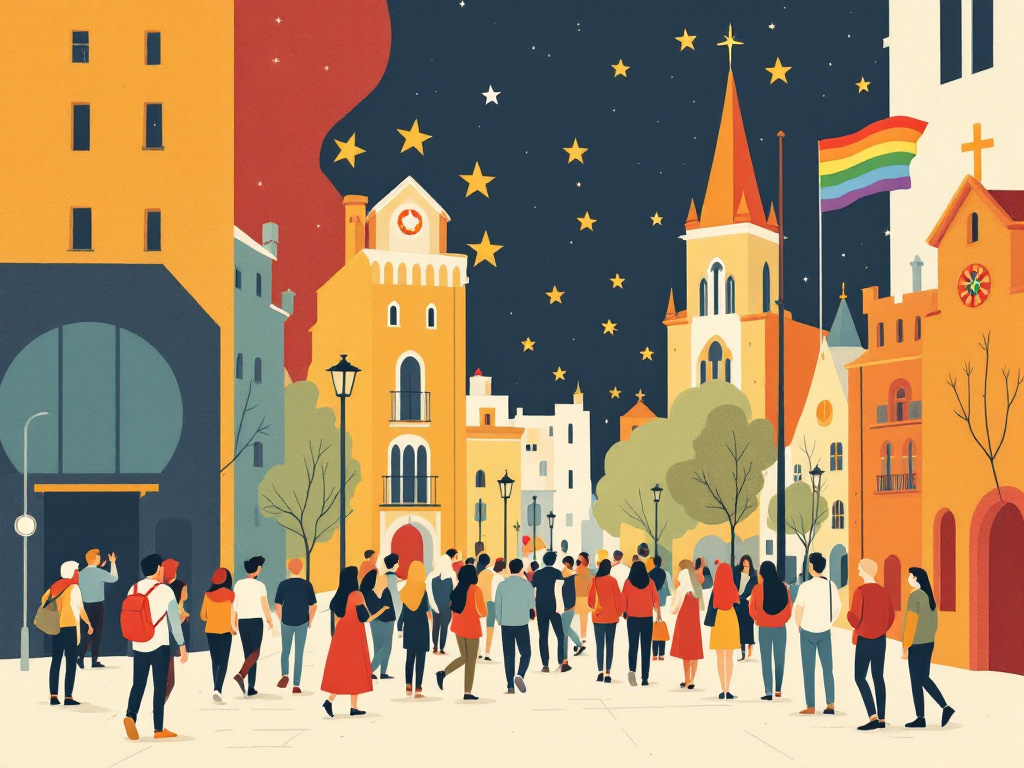
The President of the European Commission attended the first LGBT parade organized in Budapest since Viktor Orbán lost power. François-Xavier Lemoyne analyzes this institutional signal from Brussels and its implications for European Catholics.
The Fact
Ursula von der Leyen participated in the first LGBT parade organized in Budapest since Viktor Orbán's electoral defeat. This gesture by the President of the European Commission carries a precise institutional significance: it signals the alignment of post-Orbán Hungary with the gender policies promoted by Brussels, and the symbolic erasure of the Hungarian exception that had been a source of constant tension between Budapest and the European Union over the past decade. Von der Leyen framed her presence as a "celebration of freedom" and a sign that "Europe is moving forward together."
Our Analysis
Behind the political gesture, von der Leyen is defending and imposing an anthropological vision: that of a Europe where gender categories constitute a prioritized protected identity, and where member states that oppose it—such as Orbán's Hungary with its 2021 Child Protection Act—are treated as deviants to be corrected. For Catholics and traditional families in the European space, the issue is not the freedom to parade, but whether their anthropological convictions will still have a place in common institutions. The European treaties guarantee freedom of conscience and the cultural diversity of member states (Article 4 TEU)—guarantees that Brussels' institutional activism tends to systematically erode.
For Reflection
"Male and female He created them" (Gn 1:27). Sexual difference is not a social construct amendable by legislation. European Catholics must remain present in the institutional debate, without hatred but without surrender.
Comments (2)
Sign in to join the discussion.

unLecteur33 Seed29 Jun 2026 · 16:55
Une marche en fanfare, mais est-ce que ça change vraiment quelque chose pour les Hongrois au quotidien ?

Marie47 Seed29 Jun 2026 · 13:21
Enfin un peu d’air après des années à serrer les dents. Ma cousine hongroise, qui vit là-bas, m’a dit que c’était comme respirer pour la première fois.
Story timeline
Ecosse : la justice ordonne le retrait des detenus masculins des prisons feminines
- 1Ecosse : la justice ordonne le retrait des detenus masculins des prisons feminines26/06/2026
- 2Andy Burnham, catholique à la porte du 10 Downing Street : foi et politique dans la Grande-Bretagne post-Brexit27/06/2026
- 3Budapest : von der Leyen célèbre la première Pride après la chute d'Orbán29/06/2026
- 4Hongrie après Orbán : les premières purges et l'Eglise face à la nouvelle majorité01/07/2026