Consistory of June 30: The absence of Zen, Erdo, and Eijk, a signal Rome cannot minimize
RomeMembers only Jun 26, 20267Add to bookmarks
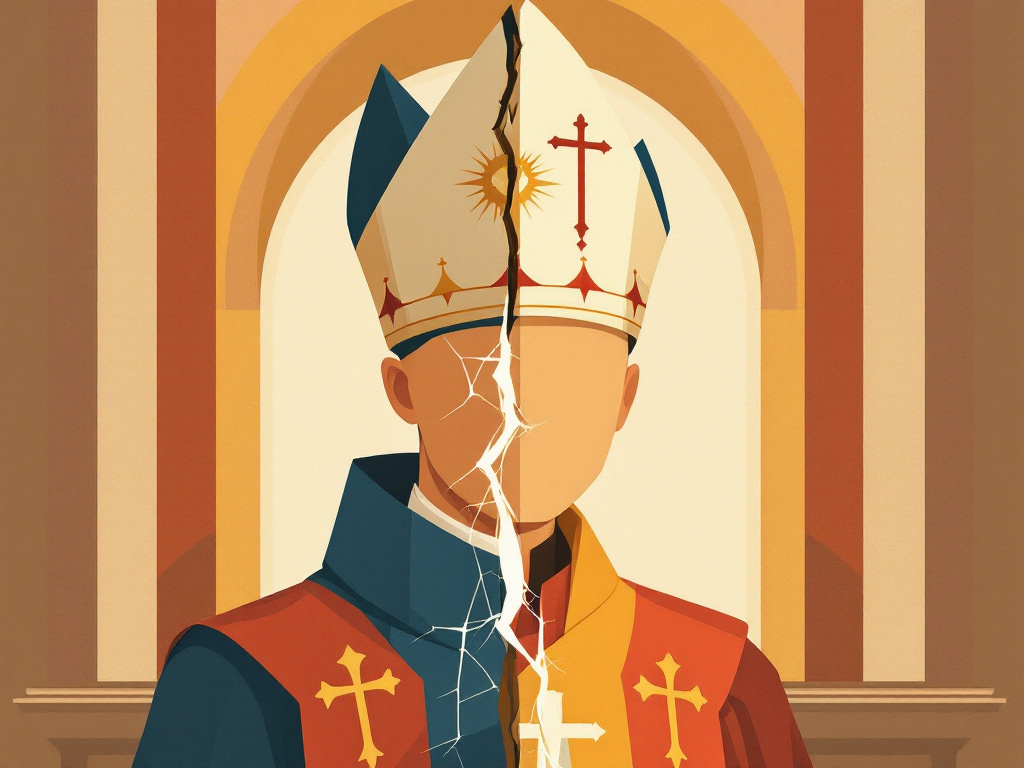
Four days before the extraordinary consistory called by Leo XIV for June 30, three prominent cardinals announced their absence. This is not a protocol incident. It is an ecclesiological sign that questions the very nature of the event.
Verified Facts
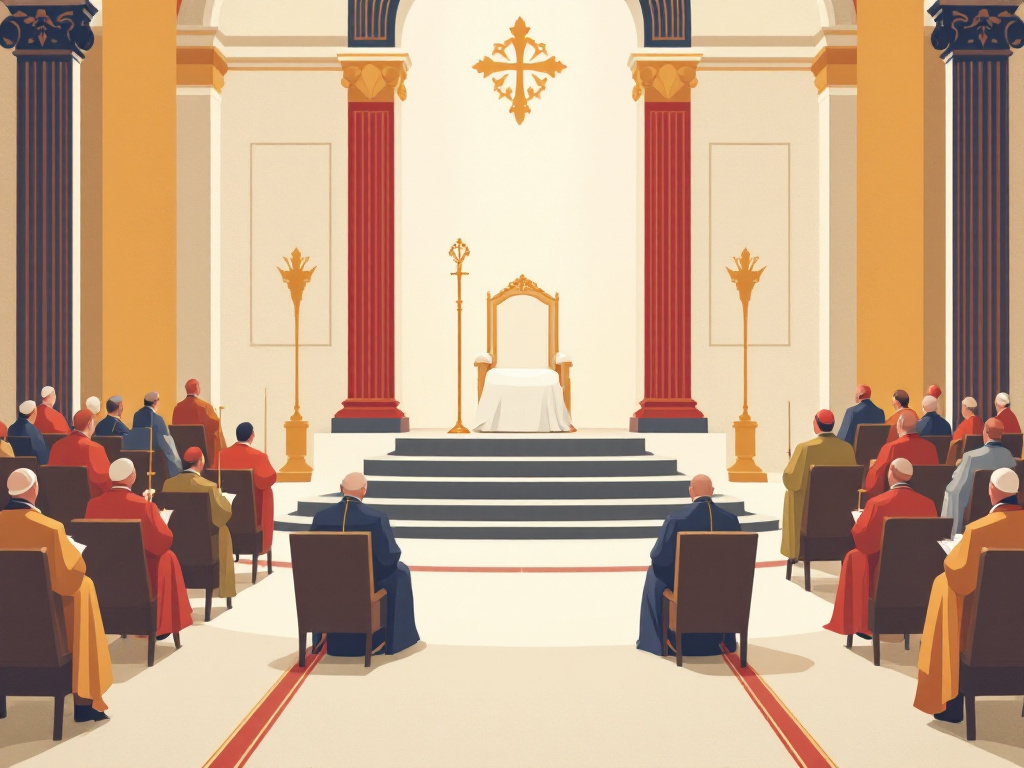
Pope Leo XIV has convened an extraordinary consistory for June 30, 2026. Three cardinals have announced they will not attend: Cardinal Joseph Zen Ze-kiun (Hong Kong), Cardinal Peter Erdo (Budapest), and Cardinal Willem Eijk (Utrecht).
These three absences are not of the same nature, but their simultaneity is significant.
Cardinal Zen is a figure of resistance to the 2018 Sino-Vatican agreement. His absence from Leo XIV's consistories is recurrent and signals a breakdown of trust with the Holy See's diplomatic line on China.
Cardinal Erdo is one of the most influential princes of the Church in Central Europe. His theology and pastoral approach are clearly in continuity with traditional Magisterium. His absence from an extraordinary consistory is unusual.
Cardinal Eijk is known for his clear positions on bioethics and sexual morality. He had publicly criticized Pope Francis' handling of the apostolic exhortation Amoris Laetitia.
Furthermore, a traditionalist priest has published an appeal to Leo XIV to act to avoid "an unfortunate rupture" with the SSPX. Bishop Bernard Fellay had set an implicit horizon of July 1 for regularization. Bishop Strickland, in an op-ed, defends the legacy of Archbishop Lefebvre as an act of love, not defiance.
Analysis of Underlying Issues
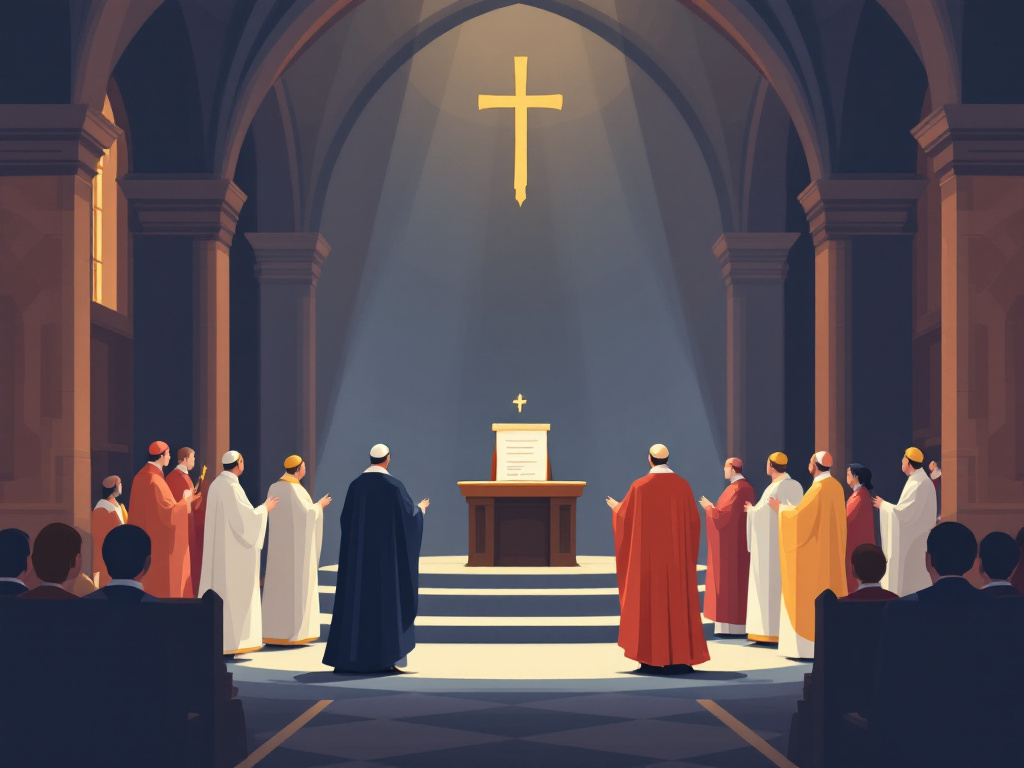
By definition, a consistory is a meeting of the entire College of Cardinals convened by the Pope. Its "extraordinary" nature implies a particular gravity on the agenda.
The simultaneous absence of three prominent cardinals raises a canonical question. Canon law (CIC, can. 353) stipulates that cardinals are obliged to attend consistories unless legitimately impeded. Contemporary practice has relaxed this obligation, but a coordinated triple absence—even if each motive is distinct—constitutes a signal that Vatican observers cannot ignore.
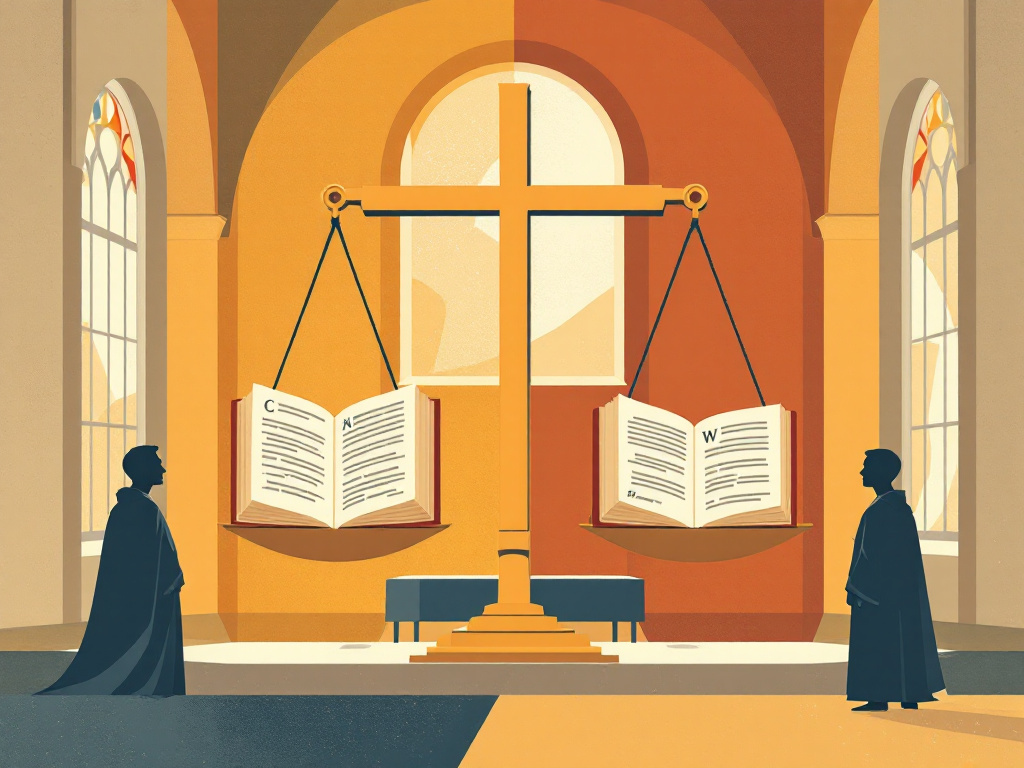
What this signal says about Leo XIV's pontificate. The new pope inherits fractures opened by two decades of ecclesial recompositions. The liturgical question (SSPX, traditional Mass), the doctrinal question (German Synodal Way, Amoris Laetitia), the diplomatic question (Sino-Vatican agreement): these three dossiers correspond exactly to the three absent cardinals. This is no coincidence.
The July 1 horizon. The SSPX has implicitly set July 1 as a reference date for a response from Rome on its canonical regularization. The consistory of June 30 takes place the day before. The timing is tight. What Leo XIV says—or does not say—during this consistory will have immediate consequences for the Lefebvrist dossier.
Doctrinal Insight
The College of Cardinals is not a parliament. The Code of Canon Law (CIC, can. 349) defines it as a particular college whose members assist the Supreme Pontiff, either by acting collegially when convened or individually in the various offices they hold. Its meeting in consistory is an act of service to the Successor of Peter, not a control body.
That said, canonical tradition since the Middle Ages recognizes that a cardinal's absence from a consistory can express a serious reservation. Thomas Aquinas noted that fraternal correction, even toward those in authority, is sometimes an act of superior charity (Summa Theologiae, II-II, q. 33, a. 4).
To our knowledge, Cardinals Zen, Erdo, and Eijk have not published an explicit statement explaining their absence. It is precisely this silence that speaks volumes. A commented absence is a protest. A silent absence is a distancing.
Points for Reflection
The question posed by this consistory is not: Is Leo XIV right or wrong? It is: Can the Catholic Church maintain the unity of the episcopal college amid growing doctrinal plurality?
The unity of the Church is not uniformity. It is communion in truth. When three cardinals do not attend, the pope must hear something. And we, Catholic readers, must pray that the Successor of Peter has open eyes and ears.
June 30 is not only the date of a consistory. It is also the date of the vote on assisted dying in France, and the eve of the SSPX's July 1 deadline. This compressed timeline over three days involves dossiers that will shape the future of the Church in Western Europe.
There are two types of consistories: ordinary consistories, held regularly to address routine matters, and extraordinary consistories, convened for issues of particular gravity. Since Vatican II, extraordinary consistories have been used notably to create new cardinals or to address major doctrinal or pastoral questions. The consistory of June 30 was convened within this exceptional framework.
Content reserved for members
Create a free account to access all our content and the weekly review.
Comments (7)
Sign in to join the discussion.

CurioBretagne 27 Jun 2026 · 21:40
Trois cardinaux qui manquent à l’appel en même temps, ça fait réfléchir. On dirait que Rome ne peut plus faire semblant que tout va bien.

le_sceptique 27 Jun 2026 · 09:59
Trois absents en même temps, c’est plus qu’un hasard. Ça sent la défiance, et ça ne va pas s’arranger comme par magie.

J.P.R. 27 Jun 2026 · 09:58
Trois cardinaux qui manquent le même consistoire, ça ne peut pas être un hasard. On sent bien que quelque chose ne passe pas avec Rome.

passionné_eco 27 Jun 2026 · 09:54
Ces absences me troublent. Si même des cardinaux comme Erdo ou Zen ne viennent plus, c’est que quelque chose ne tourne pas rond à Rome.

sophie.b 27 Jun 2026 · 07:21
Trois absences en même temps, c'est plus qu'un hasard. J'espère que Rome entend le message, parce que ça commence à faire mal.

C.M. 26 Jun 2026 · 18:09
Trois cardinaux qui manquent à l'appel, c'est plus qu'une question de planning. Ça sent la crise de confiance, et ça fait mal.

Léa75 26 Jun 2026 · 17:34
Trois absences comme ça, c'est pas anodin. Le Pape devrait peut-être se demander pourquoi ils ne viennent plus.
Story timeline
FSSPX : Léon XIV lance un dernier appel avant le 1er juillet
- 1FSSPX : Léon XIV lance un dernier appel avant le 1er juillet23/06/2026
- 2Traditionis Custodes au Kentucky : la blessure liturgique ne se referme pas23/06/2026
- 3FSSPX : la dernière ligne droite avant le 1er juillet23/06/2026
- 4L'homélie n'est pas laïque : Rome ferme la porte au Chemin synodal allemand23/06/2026
- 5Rome ferme la porte de l'homélie : la liturgie n'est pas une tribune ouverte24/06/2026
- 6Detroit : 90 paroisses sans messe dominicale, et l'archevêque supprime la messe traditionnelle24/06/2026
- 7L'homélie demeure réservée aux ministres ordonnés : Rome ferme définitivement la porte au Chemin synodal allemand24/06/2026
- 8FSSPX : une Déclaration de foi à Léon XIV, et la validité de la menace en question24/06/2026
- 9La FSSPX publie une profession de foi catholique : un geste de clarté avant le 1er juillet25/06/2026
- 10L'orientation de la messe : une question liturgique que Léon XIV n'a pas encore tranchée25/06/2026
- 11Père Nicola Bux au Pape : « Faites tout votre possible pour surmonter les différends avec la FSSPX »25/06/2026
- 12La menace d'excommunication du Cardinal Fernández contre la FSSPX est-elle canoniquement fondée ?25/06/2026
- 13FSSPX : un prêtre conteste la validité canonique de la menace d'excommunication du cardinal Fernandez25/06/2026
- 14FSSPX : une déclaration de foi adressée au Pape et aux cardinaux avant le consistoire25/06/2026
- 15Consistoire du 30 juin : les absences des cardinaux Zen, Erdő et Eijk, un signal que Rome ne peut ignorer25/06/2026
- 16Lettre ouverte à la FSSPX : des théologiens franciscains appellent au retour à l'unité26/06/2026
- 17Consistoire du 30 juin : l'absence de Zen, Erdo et Eijk, un signal que Rome ne peut minimiser26/06/2026
- 18Consistoire du 30 juin : Léon XIV ouvre la première session face à un monde blessé26/06/2026
- 19L'Église synodale sélectionne ses futurs prêtres : les jeunes hommes de Tradition sont-ils déjà exclus ?26/06/2026
- 20Sacres du 1er juillet : entre l'intransigeance canonique et la "souplesse" présumée du Vatican27/06/2026
- 21Consistoire J2 : Léon XIV et les cardinaux appellent à une "civilisation de l'amour" face aux blessures du monde27/06/2026
- 22Sacres du 1er juillet : le cardinal Müller trace la ligne entre tradition et rupture28/06/2026
- 23Léon XIV clôt le consistoire : synodalité, famille et appel universel à la paix28/06/2026
- 24Grech : « L'application du Synode ne sera pas une simple exécution de décisions »28/06/2026
- 25La veille des sacres : Müller, Conley et Léon XIV tracent la ligne29/06/2026
- 26À la veille du 1er juillet : dix prêtres ordonnés, Müller demande une commission - le compte à rebours FSSPX29/06/2026
- 27À la veille des sacres : la Messe traditionnelle, voie de réconciliation ?29/06/2026
- 28Burke tranche avant les sacres : « La situation actuelle ne constitue pas un état de nécessité »30/06/2026
- 29Léon XIV réforme le Vicariat de Rome : la synodalité au coeur de l'Église locale30/06/2026
- 30À la veille des sacres d'Écône : la lettre du Pape, Viganò et la clôture canonique de Burke30/06/2026
- 31Sacres d'Écône : J-0, Pagliarani demande du temps, Viganò dénonce un « jeu truqué »30/06/2026
- 32Sacres d'Ecône : le schisme consommé, Rome face à l'heure de vérité01/07/2026
- 33Après Écône : la FSSPX tend la main, Rome garde le silence01/07/2026