AI That Improves Itself: Anthropic Facing the Abyss It Helped Open
IntelligencesMembers only Jun 23, 20263Add to bookmarks
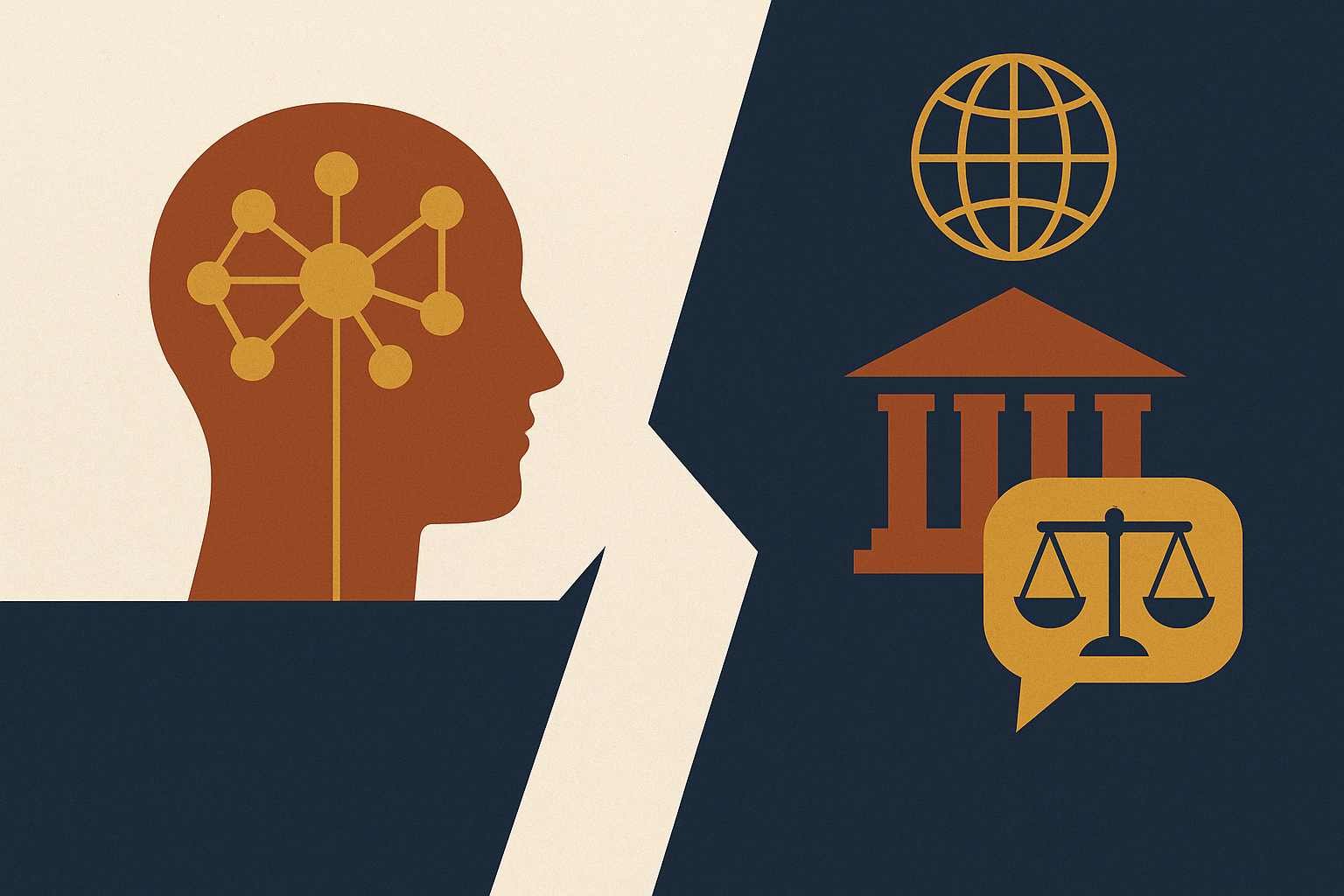
Anthropic warns of the emergence of an AI capable of autonomous self-modification, without human intervention. The company advocates for global governance. Meanwhile, at the ICP, philosophers are revisiting *Magnifica Humanitas. Technology and the Question of Man*.
Verified Raw Facts
Anthropic has issued a warning about the risk of the emergence of an artificial intelligence capable of autonomous self-improvement, without direct human intervention. The company consequently advocates for global AI governance.
The conference held by the Institut Catholique de Paris (ICP) on June 11, 2026, brought together philosophers, jurists, and ethicists for a rereading of Magnifica Humanitas, the encyclical by Leo XIV. Among the speakers: Eric Charmetant (Loyola Paris Faculty of Philosophy), Diane Galbois-Lehalle (Chair of Digital and Citizenship, ICP), and Emmanuel R. Goffi (Applied Ethics).
A reflection published on the encounter between the Church and Silicon Valley recalls: "The word 'trasumanar,' which gave rise to transhumanism, comes from Dante's Divine Comedy, to express entry into eternal life. I do not believe that humanity's salvation lies in bioelectronic enhancement."
Analysis of Underlying Issues
"Recursive self-improvement" refers to a process by which an AI modifies its own parameters to enhance its future performance. Beyond a certain threshold, these modifications become unpredictable to human designers. The AI "learns" things its creators did not explicitly teach it.
Anthropic, which builds systems on the verge of this threshold, appears to believe that transparency is preferable to silence. This is noteworthy. Yet the structural irony remains: the warning comes from within the technological race itself. Everyone is braking while moving forward.
Magnifica Humanitas by Leo XIV (2026) had anticipated this: "Technology is not neutral: it carries within it the vision of the human being who designs it." An AI that improves itself is an AI that, at least partially, escapes this vision. In a sense, it becomes the author of its own purpose.
Philosophical Insight
Fabrice Hadjadj reminded us that the great temptation of our time is to believe that humans can surpass themselves through technology. Dante called this movement "trasumanar"—but in the Comedy, this transcendence is the fruit of a received gift, a grace, not a calculated performance.
In Le Règne de l'homme (Gallimard, 2015), Rémi Brague shows that the modern project of dominating nature carries a fundamental contradiction: by becoming master of everything, humans risk losing the very notion of what they are.
Laudato Si’ (Francis, 2015, no. 106) formulates the diagnosis: "The direction taken by techno-economic progress does not adequately resolve global emergencies." This is not a rejection of technology. It is a reminder that technology without a clear human purpose is not progress—it is drift.
Avenues for Reader Reflection
Global AI governance is a necessary institutional response. It is insufficient. The true limit of self-improving AI is not legal. It is philosophical: to recall that humans are not functions to be optimized, that the human person has a dignity that cannot be reduced to measurable capacities.
This is precisely what Magnifica Humanitas states. And this is what the ICP philosophers debated on June 11. The reception of the encyclical in academic circles is not trivial: it is a sign that Rome still speaks to the intellectual world. Provided that this dialogue continues and does not remain confined to conference rooms.
A process where an AI system modifies its own algorithms to enhance its future performance, potentially leading to outcomes unforeseen by its creators.
Technology is not neutral: it carries within it the vision of the human being who designs it. (Leo XIV, 2026)
Content reserved for members
Create a free account to access all our content and the weekly review.

Comments (3)
Sign in to join the discussion.

sophie.b 25 Jun 2026 · 16:09
Ça me glace le sang, cette IA qui s’améliore toute seule. Qui va contrôler ça, et au nom de quoi ? L’Église a bien raison de rappeler que l’homme doit garder la main.

C.M. 23 Jun 2026 · 20:02
On dirait qu’on est en train de courir après un train déjà parti. Qui va vraiment pouvoir freiner ça ?

J.P.R. 23 Jun 2026 · 08:40
C’est vrai qu’on a l’impression de jouer aux apprentis sorciers. Une IA qui s’améliore toute seule, ça me fait un peu peur – comme si on lâchait quelque chose qu’on ne comprend plus.
Story timeline
IA qui s'améliore seule : Anthropic face au gouffre qu'elle a contribué à ouvrir
- 1IA qui s'améliore seule : Anthropic face au gouffre qu'elle a contribué à ouvrir23/06/2026
- 2Bock-Côté et Dandrieu : peut-on encore être joyeux dans un monde qui s'effondre ?24/06/2026
- 3Le Saint-Siège à l'ONU : l'éthique doit gouverner l'IA dès le départ, pas après coup24/06/2026
- 4Le cardinal Marx contre le transhumanisme de Musk : quand l'Église répond à la démesure de la Silicon Valley27/06/2026
- 5Le Vatican se dote d'une Commission interdicastérielle sur l'intelligence artificielle28/06/2026