Léon XIV for the Feast of Saints Peter and Paul: "Every Christian is called to be a builder of unity"
Rome Jun 29, 20264Add to bookmarks
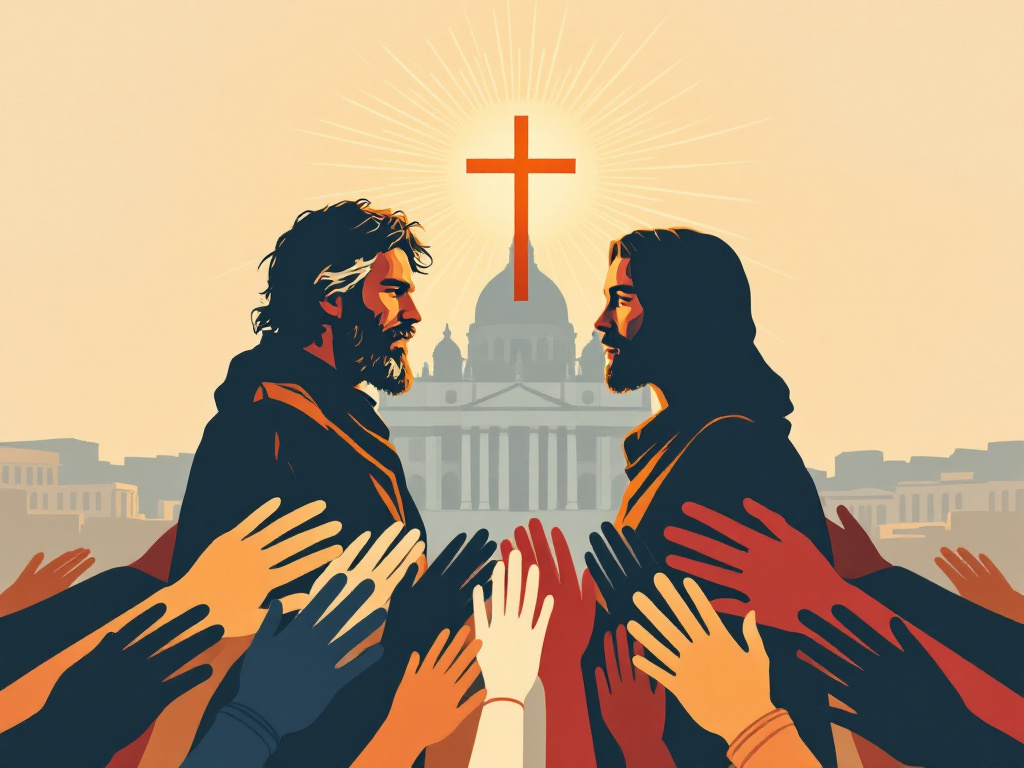
On this 29th of June, the solemnity of Saints Peter and Paul, Leo XIV celebrated Mass in St. Peter's Basilica, conferred the pallium on new archbishops, and delivered his Angelus on unity in diversity. Abbot Grégoire Masson summarizes this Roman highlight.
The Fact
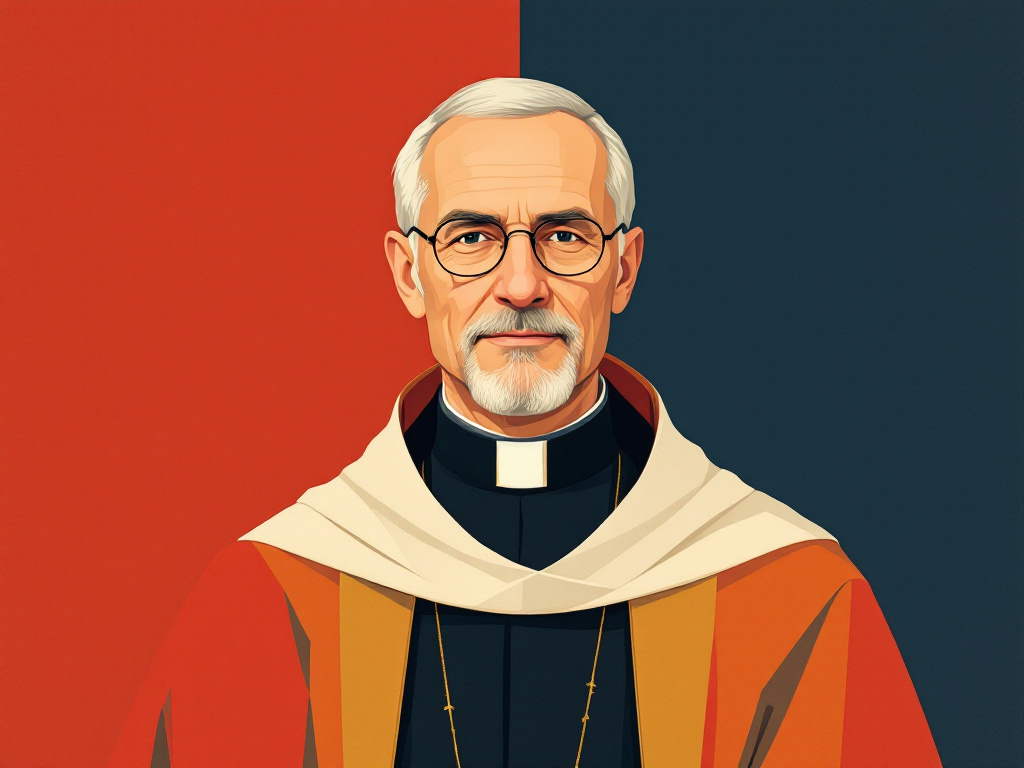
On this 29th of June 2026, the liturgical feast of Saints Peter and Paul, patrons of Rome, Pope Leo XIV presided over the solemn Mass in St. Peter's Basilica, during which he conferred the pallium upon the new metropolitan archbishops appointed over the past twelve months—a visible sign of their bond with the See of Peter. The central theme of his homily was communion in difference: "Every Christian is called to be a builder of unity," he declared, reflecting on the contrasting personalities of the two apostles—the impetuous fisherman from Galilee and the intellectual from Tarsus—whom the Spirit united in the same faith and martyrdom. At the Angelus, he reiterated this message before thousands of pilgrims: the catholicity of the Church is a "good news of difference," not a leveling. He also made an appeal for Peter's Pence, emphasizing the Holy See's charitable mission toward the most vulnerable.
Our Perspective
The date is not insignificant. On this 29th of June 2026, as the Society of Saint Pius X prepares to proceed with illicit episcopal consecrations on the 1st of July, the papal discourse on unity in diversity takes on particular significance. Leo XIV does not explicitly mention the SSPX crisis, but his insistence on Petrine primacy as the foundation of Catholic unity—"upon this rock"—resonates as a gentle yet firm doctrinal response. The conferral of the pallium serves as a liturgical gesture reminding us that all legitimate episcopal jurisdiction flows through Rome.
For Reflection
"For flesh and blood has not revealed this to you, but my Father who is in heaven" (Mt 16:17). Peter's faith is a gift from God before being a human virtue. On this feast day, let us pray for the visible unity of the Church, wounded but ever alive.
Comments (4)
Sign in to join the discussion.

J.P.R. 30 Jun 2026 · 07:16
C’est vrai que Pierre et Paul n’étaient pas toujours d’accord, mais justement, c’est ça la force : ils ont réussi à avancer ensemble malgré leurs différences. L’unité, c’est pas l’uniformité.

passionné_eco 29 Jun 2026 · 15:55
L’unité, c’est bien, mais ça se voit aussi dans les actes. Quand est-ce qu’on verra vraiment les pauvres accueillis autrement qu’avec des mots ?

C. Moreau 29 Jun 2026 · 19:23
L’unité, c’est pas que des belles paroles. Si on parle de communion, faut aussi voir comment on traite ceux qui ont rien, sinon ça sonne creux.

Marie47 29 Jun 2026 · 19:27
L’unité, c’est pas que des belles paroles : un café partagé avec un SDF devant chez moi, ça m’a plus touché que tous les discours.

unLecteur33 29 Jun 2026 · 13:49
Deux tempéraments différents, une seule Église. Comment on fait, nous, pour pas tout faire dérailler quand on se comprend pas ?

Clémence R. 29 Jun 2026 · 13:02
L’unité, d’accord, mais est-ce que ça veut dire qu’on doit tous faire pareil ? J’ai peur qu’on étouffe les différences qui font la richesse de l’Église.

LecteurDuDimanche 29 Jun 2026 · 15:45
L’unité, c’est bien, mais chez nous le curé et le diacre se parlent à peine… Comment on fait pour avancer dans ces cas-là ?
Story timeline
Paris attend le Pape : dix mille bénévoles pour une rencontre historique
- 1Paris attend le Pape : dix mille bénévoles pour une rencontre historique23/06/2026
- 2Synode : trois jours de travaux avec les organismes continentaux - la collégialité à l'épreuve23/06/2026
- 3« Magnifica humanitas » : l'encyclique de Léon XIV, un acte magistériel qui marque les esprits23/06/2026
- 4Léon XIV à Pavie : bâtisseurs de paix, pas de haine24/06/2026
- 5Léon XIV avant Paris : eucharistie, Pavie et consistoire, trois gestes qui préparent la visite24/06/2026
- 6Léon XIV pour la fête des saints Pierre et Paul : "Tout chrétien est appelé à être bâtisseur d'unité"29/06/2026