Swearing-in Ceremonies of July 1st: Between Canonical Intransigence and the Vatican's Presumed "Flexibility"
RomeMembers only Jun 27, 20268Add to bookmarks
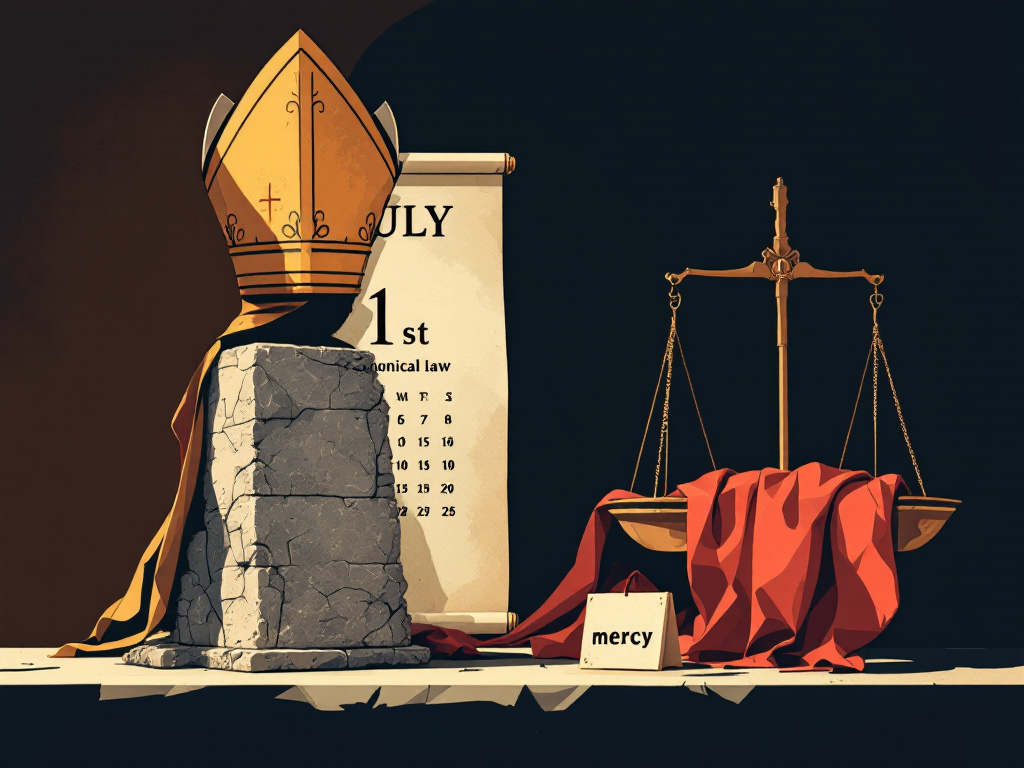
In four days, the SSPX could take the step that led Archbishop Lefebvre to the excommunications of 1988. Some observers invoke the Vatican's "flexibility"; canonical analysis, however, is unequivocal.
Context
In our Issue No. 1 (week 26), we reported on the FSSPX's profession of faith addressed to Leo XIV on June 24, 2026, and the announcement of episcopal consecrations without pontifical mandate for July 1. We also followed the challenge to the canonical validity of the excommunication threat issued by Cardinal Fernández, as well as Father Bux's public plea to the Pope to act. The hour of consequences is approaching. Two interpretations clash within Catholic circles: Roman "intransigence" and the Vatican's presumed "flexibility." These must be examined with the rigor that the gravity of the moment demands.
The Facts
Le Salon Beige reports (June 27, 2026) an analysis by observers distinguishing two opposing dynamics in the Vatican's attitude: on the one hand, the principled refusal of any consecration without pontifical mandate; on the other, a disciplinary policy that, from Summorum Pontificum (2007) to Traditionis Custodes (2021), oscillates between openness and restriction. The FSSPX's profession of faith of June 24 affirms full communion of faith with Rome while refusing any submission to the disciplinary dimension of synodality, considered an ecclesiological deviation. Over twenty Franciscan professors have publicly begged the FSSPX to abandon the consecrations. Leo XIV, in opening the extraordinary consistory on June 26 on synodality as a "path toward communion," sent no signal of concession.
Doctrinal Analysis
Canon 1382 of the Code of Canon Law is unequivocal: "A bishop who, without a pontifical mandate, consecrates someone a bishop, and the one who receives the consecration from him, incur a latae sententiae excommunication reserved to the Apostolic See." Let us recall the fundamental distinction between sacramental validity and canonical licitness: an episcopal consecration without papal mandate is theologically valid—it truly confers the episcopate—but canonically illicit, and incurs automatic excommunication upon completion of the act. The excommunications of 1988 were lifted by Benedict XVI in 2009 (decree Ecclesiae unitatem), without, however, regularizing the FSSPX's ecclesiological situation. A second act of the same nature would considerably aggravate the rupture, in a different ecclesial context.
Stakes for the Church and the Faithful
If the consecrations take place on July 1, the FSSPX will once again formally sever itself from full communion with Rome. For the faithful regularly followed by FSSPX priests, the question of conscience is real: can one, in fidelity to the Church, support a structure in a state of formal excommunication? Catholic doctrine on the unity of the Church (Lumen Gentium, no. 14) teaches that full incorporation into the Church requires the bonds of profession of faith, the sacraments, ecclesiastical governance, and communion. Disciplinary disputes, however legitimate in their object, cannot justify a rupture with Peter.
Critical Reading and Blind Spots
The argument of "Vatican flexibility" deserves cold analysis. Since Traditionis Custodes, Rome has progressively restricted the extraordinary form of the Roman Rite—precisely one of the FSSPX's grievances. Invoking "Roman flexibility" to justify a unilateral action is a risky gamble, based on a reading of Vatican silences that nothing formally authorizes. The consistory opened on June 26 confirms that Leo XIV intends to consolidate synodality, not reduce it.
To Reflect and Act
*Peter, are you there? I will pray for you, that your faith may not fail. And you, when you have turned back, strengthen your brothers.*
Content reserved for members
Create a free account to access all our content and the weekly review.
Comments (8)
Sign in to join the discussion.

Clémence R. 28 Jun 2026 · 08:13
La souplesse, c'est bien joli, mais une consécration sans mandat, ça reste une consécration sans mandat. On verra ce que Rome décide.

Th. Aubry 28 Jun 2026 · 07:25
En Bretagne, on sait depuis toujours que la règle doit parfois s’adapter sans trahir l’Église. J’espère que Rome saura faire la part des choses.

Léa75 27 Jun 2026 · 21:05
Et si Rome laissait faire pour éviter un nouveau schisme ? On dirait qu’ils marchent sur des œufs.

LecteurDuDimanche 27 Jun 2026 · 20:57
Prier, c’est bien, mais là on attend surtout que Rome parle clairement. L’ambiguïté ne rend service à personne.

Huyền_HN 27 Jun 2026 · 20:27
C’est vrai que ces prêtres rendent service, mais est-ce que ça justifie de braver l’autorité de l’Église ?

passionné_eco 27 Jun 2026 · 19:16
C’est vrai qu’on nous parle de souplesse, mais à quel prix ? La vérité, c’est qu’on ne peut pas bricoler avec les sacres sans mandat.

J.P.R. 27 Jun 2026 · 19:03
Le Vatican va-t-il vraiment laisser faire sans réagir ? J’ai du mal à croire qu’on en arrive là, après tout ce qu’on a vu depuis 1988.

C.M. 27 Jun 2026 · 18:29
C’est vrai que Rome a parfois l’air plus soucieux des règles que des gens. On peut obéir sans étouffer les consciences, non ?
Story timeline
FSSPX : Léon XIV lance un dernier appel avant le 1er juillet
- 1FSSPX : Léon XIV lance un dernier appel avant le 1er juillet23/06/2026
- 2Traditionis Custodes au Kentucky : la blessure liturgique ne se referme pas23/06/2026
- 3FSSPX : la dernière ligne droite avant le 1er juillet23/06/2026
- 4L'homélie n'est pas laïque : Rome ferme la porte au Chemin synodal allemand23/06/2026
- 5Rome ferme la porte de l'homélie : la liturgie n'est pas une tribune ouverte24/06/2026
- 6Detroit : 90 paroisses sans messe dominicale, et l'archevêque supprime la messe traditionnelle24/06/2026
- 7L'homélie demeure réservée aux ministres ordonnés : Rome ferme définitivement la porte au Chemin synodal allemand24/06/2026
- 8FSSPX : une Déclaration de foi à Léon XIV, et la validité de la menace en question24/06/2026
- 9La FSSPX publie une profession de foi catholique : un geste de clarté avant le 1er juillet25/06/2026
- 10L'orientation de la messe : une question liturgique que Léon XIV n'a pas encore tranchée25/06/2026
- 11Père Nicola Bux au Pape : « Faites tout votre possible pour surmonter les différends avec la FSSPX »25/06/2026
- 12La menace d'excommunication du Cardinal Fernández contre la FSSPX est-elle canoniquement fondée ?25/06/2026
- 13FSSPX : un prêtre conteste la validité canonique de la menace d'excommunication du cardinal Fernandez25/06/2026
- 14FSSPX : une déclaration de foi adressée au Pape et aux cardinaux avant le consistoire25/06/2026
- 15Consistoire du 30 juin : les absences des cardinaux Zen, Erdő et Eijk, un signal que Rome ne peut ignorer25/06/2026
- 16Lettre ouverte à la FSSPX : des théologiens franciscains appellent au retour à l'unité26/06/2026
- 17Consistoire du 30 juin : l'absence de Zen, Erdo et Eijk, un signal que Rome ne peut minimiser26/06/2026
- 18Consistoire du 30 juin : Léon XIV ouvre la première session face à un monde blessé26/06/2026
- 19L'Église synodale sélectionne ses futurs prêtres : les jeunes hommes de Tradition sont-ils déjà exclus ?26/06/2026
- 20Sacres du 1er juillet : entre l'intransigeance canonique et la "souplesse" présumée du Vatican27/06/2026
- 21Consistoire J2 : Léon XIV et les cardinaux appellent à une "civilisation de l'amour" face aux blessures du monde27/06/2026
- 22Sacres du 1er juillet : le cardinal Müller trace la ligne entre tradition et rupture28/06/2026
- 23Léon XIV clôt le consistoire : synodalité, famille et appel universel à la paix28/06/2026
- 24Grech : « L'application du Synode ne sera pas une simple exécution de décisions »28/06/2026
- 25La veille des sacres : Müller, Conley et Léon XIV tracent la ligne29/06/2026
- 26À la veille du 1er juillet : dix prêtres ordonnés, Müller demande une commission - le compte à rebours FSSPX29/06/2026
- 27À la veille des sacres : la Messe traditionnelle, voie de réconciliation ?29/06/2026
- 28Burke tranche avant les sacres : « La situation actuelle ne constitue pas un état de nécessité »30/06/2026
- 29Léon XIV réforme le Vicariat de Rome : la synodalité au coeur de l'Église locale30/06/2026
- 30À la veille des sacres d'Écône : la lettre du Pape, Viganò et la clôture canonique de Burke30/06/2026
- 31Sacres d'Écône : J-0, Pagliarani demande du temps, Viganò dénonce un « jeu truqué »30/06/2026
- 32Sacres d'Ecône : le schisme consommé, Rome face à l'heure de vérité01/07/2026
- 33Après Écône : la FSSPX tend la main, Rome garde le silence01/07/2026