Brexit, ten years on: a return is possible, but at what cost for whom?
EuropeMembers only Jun 24, 20262Add to bookmarks
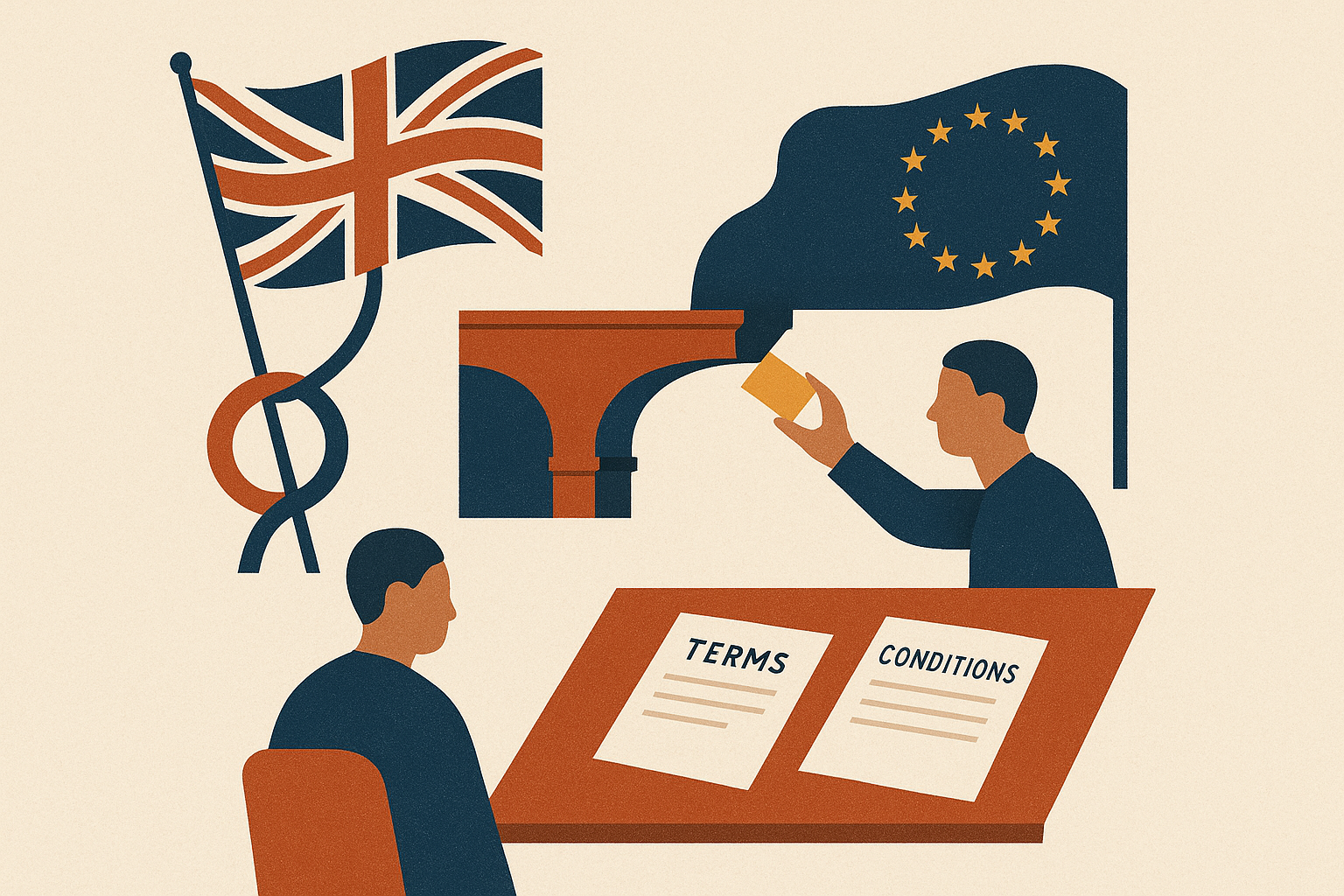
June 23, 2026 marks the tenth anniversary of the referendum that took the United Kingdom out of the European Union. The Commission claims to be ready for a rapprochement. But the conditions set are those of a return, not a partnership. François-Xavier Lemoyne analyzes the terms of a reconciliation that has yet to choose its name.
Context
In our previous editions, we had followed the economic impact of Brexit and the first reconciliation initiatives launched by Prime Minister Keir Starmer before his resignation. June 23, 2026, is a symbolic date: it marks the exact anniversary of the 2016 referendum in which 51.9% of Britons voted to leave the European Union. Ten years later, the question is no longer whether Brexit has succeeded—polls unanimously say it has not—but to understand what the current rapprochement truly means.
The Facts
According to La Croix (June 23, 2026), the European Commission, Parliament, and member states are ready to "reset" relations with London, regardless of the next British Prime Minister. The conditions set by the European side are clear: regulatory alignment in key areas, contributions to certain program budgets, and partial acceptance of free movement for young people.
A majority of Britons regret the consequences of Brexit, according to polls cited by Le Figaro. Poverty has reached an unprecedented level in thirty years. Between Brexit, Covid, and inflation linked to the wars in Ukraine and the Middle East, it is the most vulnerable who have paid the heaviest price. Michel Barnier, who negotiated the divorce between the UK and the EU, tells Le Figaro that "the Brexit warning is that we must heed popular concerns" in the face of the risk of a nationalist or populist victory in France and Germany.
Doctrinal Analysis
The Church's social teaching does not take a position on Brexit as such. However, the Social Doctrine provides valuable analytical frameworks for understanding the human consequences of the 2016 choice. The principle of subsidiarity (Catechismus Ecclesiae Catholicae, n. 1883) reminds us that decisions must be made at the appropriate level: neither Brussels' hyper-centralism nor national sovereign withdrawal fully satisfy this principle. What Brexit revealed is that the European project has failed to win the affection of those it economically marginalizes.
Solidarity, another pillar of the Social Doctrine (Sollicitudo Rei Socialis, n. 38-40), implies that European integration cannot be based solely on economic and regulatory flows. It must embody a community of destiny. This is what the 2016 referendum highlighted negatively: half of the UK never felt that the EU was their home.
Stakes for the Church and the Faithful
For British Catholics, the Brexit question has always had a concrete dimension: the rights of European nationals—including a large proportion of Polish, Irish, and Italian Catholics—living in the UK. Ten years later, hundreds of thousands have regularized their status, but uncertainties remain.
The Catholic Church in England and Wales had spoken out before the referendum, emphasizing that the decision should be guided by the common good rather than national interest alone. Ten years later, this criterion remains the right measure to judge the ongoing rapprochement: does it serve the common good of the peoples, or does it serve Brussels' institutional interests?
Critical Perspective and Blind Spots
The rapprochement presented as inevitable deserves critical scrutiny. The conditions set by the EU—regulatory alignment, budgetary contributions, partial free movement—resemble more of a conditional return than a true equal partnership. The UK would be a "rule-taker" without being a decision-maker: precisely the situation the Leave camp had deemed intolerable.
The blind spot in media debate is social. Poverty worsened by Brexit hits hardest in the regions that voted Leave the most: these are the working classes of northern England, Wales, and certain areas of Scotland. If rapprochement with the EU does not address their concrete concerns—employment, housing, public services—it will not resolve the political fracture that produced Brexit. It will merely shift it.
To Reflect and Act Upon
The lesson Michel Barnier draws from Brexit for France and Germany is one of civic prudence: when popular concerns are not heard, they find other channels, often less constructive. For Catholics engaged in politics, reminding others that the common good is not synonymous with GDP growth or institutional stability remains an irreplaceable contribution.
51.9% of Britons had voted Leave in June 2016. In 2026, a majority of respondents regret that choice. Poverty in the UK has reached its highest level in 30 years. Keir Starmer, the outgoing Prime Minister, had initiated a rapprochement with the EU before leaving office.
Content reserved for members
Create a free account to access all our content and the weekly review.

Comments (2)
Sign in to join the discussion.

J.P.R. 26 Jun 2026 · 07:21
Dix ans après, on leur propose de revenir, mais c'est à prendre ou à laisser : même règles qu'avant, sans aucune exception. Ça fait un peu marché de dupes, non ?

CurioBretagne 24 Jun 2026 · 22:40
Dix ans après, les promesses du Brexit sont restées lettre morte. Les gens le voient, mais les politiques font encore semblant de ne pas comprendre.
Story timeline
Brexit 10 ans : le bilan d'un divorce européen
- 1Brexit, dix ans après : l'Europe face à ses propres fractures23/06/2026
- 2Dix ans de Brexit : une pauvreté aggravée, un rapprochement conditionné, un avertissement pour l'Europe23/06/2026
- 3Brexit, dix ans après : la tentation du retour et ses conditions impossibles23/06/2026
- 4Brexit, dix ans après : le retour est possible, mais à quel prix pour qui ?24/06/2026