Brexit, Ten Years On: Europe Facing Its Own Fractures
EuropeMembers only Jun 23, 20262Add to bookmarks
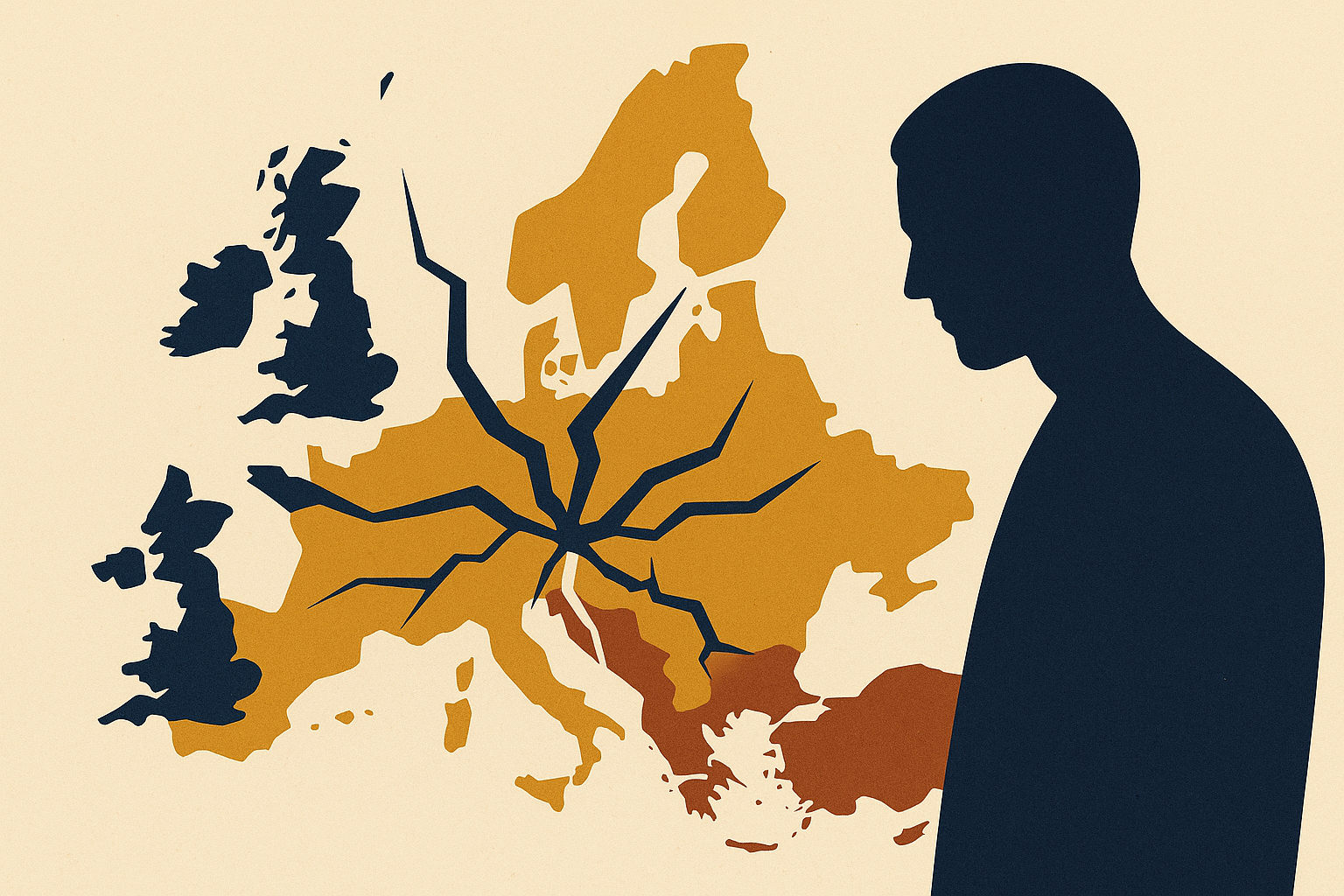
On June 23, 2016, 51.9% of Britons voted to leave the European Union. Ten years later, neither the British nor Europe are celebrating. The assessment raises a deeper question: what do we want from Europe?
Context
On June 23, 2016, 51.9% of Britons voted to leave the European Union. Ten years later, neither the British nor the Europeans are celebrating. Outgoing Prime Minister Keir Starmer had initiated a process of rapprochement with the EU, but a full return to the Union is not on the agenda.
The Facts
Four prime ministers have succeeded one another in the United Kingdom since the referendum: Cameron (who resigned the day after the vote), May, Johnson, and Starmer. The United Kingdom and the EU are, as La Croix noted on June 23, 2026, "on the path to a tentative rapprochement." A majority of Britons regret Brexit according to polls.
Yet Brexit has not resolved the problems that gave rise to it. Neither immigration, nor the cost of living, nor the sense of democratic dispossession have improved decisively since 2016. "The shadow of Brexit continues to loom over British political life," notes Le Figaro, without anyone wanting a full return to the EU.
Doctrinal Analysis
The principle of subsidiarity, formulated by Pius XI in Quadragesimo Anno (1931, § 79) and developed by John Paul II in Centesimus Annus (n. 48, 1991), is not a nationalist argument: it is a requirement of good governance. Decisions must be taken at the level closest to the people concerned, and should only be elevated when the lower level is insufficient.
This institutional architecture is proclaimed in the European Union’s founding texts while decisions are centralized in Brussels. The gap between principle and practice is precisely what the 2016 vote sanctioned—clumsily, mixed with identity politics, but not without foundation. Brexit is partly a vote for subsidiarity, not conceptualized, but real.
Stakes for the Church and the Faithful
The ongoing enlargement—Ukraine, Western Balkans—raises the same question on a larger scale: can the Union expand without reforming its governance structures? The answer will determine the credibility of the European project for the next generation.
European Catholics have a particular role to play here. Bringing the demand for subsidiarity into public debate, where it is most often absent or misunderstood, means contributing to a Europe that respects individuals and intermediate communities, in accordance with the Church’s social doctrine.
Critical Reading and Blind Spots
Brexit is a shared failure. It reveals both the limits of a European construction too distant from citizens and the difficulty of a people to ask the right questions within the right framework. The exit has produced neither the benefits expected by the Leave camp nor the disasters predicted by the Remain camp. A dispossession without net gain.
Keir Starmer leaves power without having resolved the question posed in 2016. The rapprochement initiated will remain superficial if it does not address the fundamental questions about the democratic legitimacy of European construction.
To Reflect and Act Upon
Ten years later, what do we want from Europe? The question is not only for the United Kingdom. It challenges every European citizen who perceives a gap between Brussels’ decisions and the realities of their daily life.
The Church’s social doctrine offers a framework for discernment that secular debates ignore. Engaged Catholics have a responsibility to bring it into the debate—not as a partisan argument, but as a demand for reason and humanity.
The share of votes in favor of Leave in the June 23, 2016 referendum. Out of 33 million voters, half a million votes were enough to set in motion a historic ten-year rupture.
Content reserved for members
Create a free account to access all our content and the weekly review.

Comments (2)
Sign in to join the discussion.

Ph. Renard 23 Jun 2026 · 19:30
Dix ans après, je me demande si on n’a pas manqué une occasion de vraiment écouter les Britanniques au lieu de camper sur nos positions.

passionné_eco 23 Jun 2026 · 13:48
Dix ans après, le Brexit n’a pas tenu ses promesses. L’Europe, elle, reste trop dans le calcul et pas assez dans le concret pour les familles.
Story timeline
Brexit 10 ans : le bilan d'un divorce européen
- 1Brexit, dix ans après : l'Europe face à ses propres fractures23/06/2026
- 2Dix ans de Brexit : une pauvreté aggravée, un rapprochement conditionné, un avertissement pour l'Europe23/06/2026
- 3Brexit, dix ans après : la tentation du retour et ses conditions impossibles23/06/2026
- 4Brexit, dix ans après : le retour est possible, mais à quel prix pour qui ?24/06/2026