Coronations on July 1st: Cardinal Müller Draws the Line Between Tradition and Rupture
RomeMembers only Jun 28, 20266Add to bookmarks

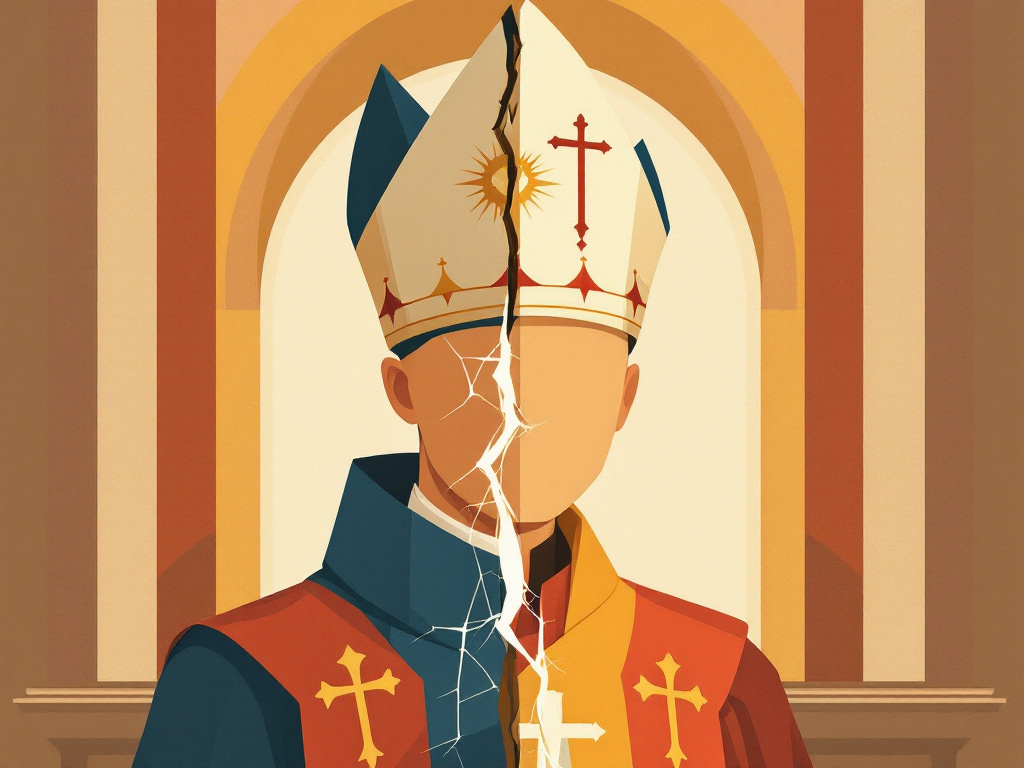
Three days before the episcopal consecrations announced by the SSPX, Cardinal Müller spoke at the consistory to formally distinguish the traditional Mass—legitimate—from the approach of the SSPX—a rupture. A major theological clarification, which calls on Rome to respond.
Context
We had followed the announcement of the episcopal consecrations without pontifical mandate, scheduled for July 1, 2026, which the Society of Saint Pius X maintained despite warnings from the Dicastery for Bishops. We had also reported on the profession of faith addressed by the SSPX to Pope Leo XIV on June 24, and the appeals by Father Bux and over twenty Franciscan professors. The moment of decision is approaching. It is in this context that Cardinal Müller, Prefect Emeritus of the Congregation for the Doctrine of the Faith, spoke during the extraordinary consistory.
The Facts
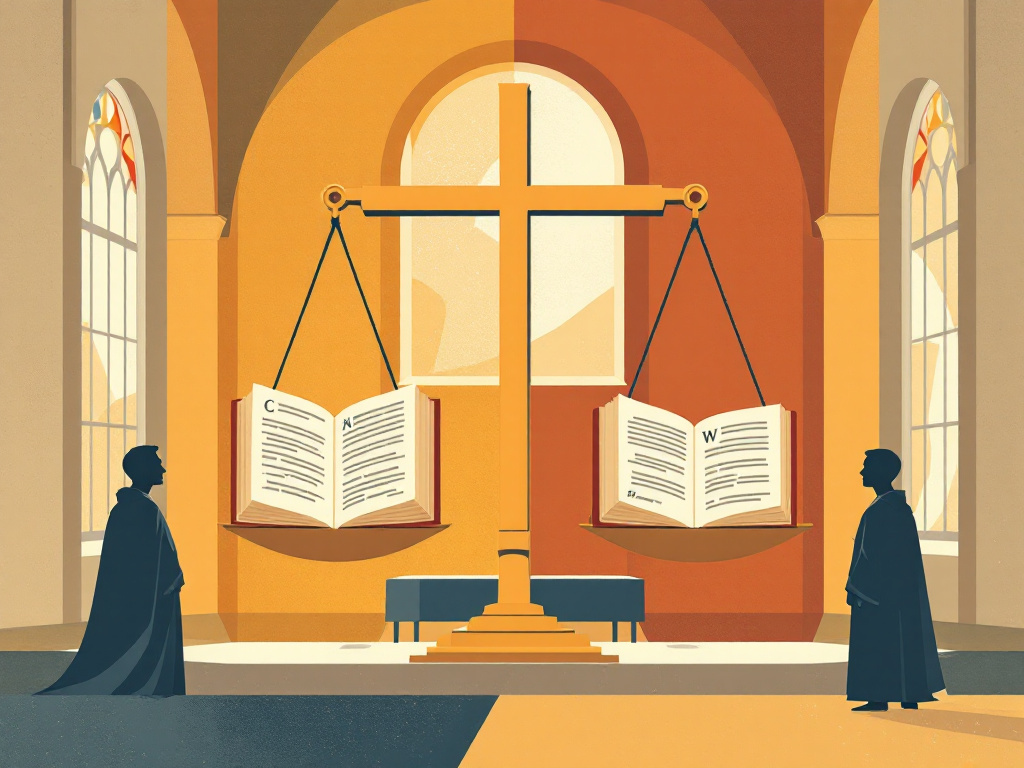
Before the cardinals gathered in consistory, Gerhard Ludwig Müller made a distinction that Rome had not expressed with such clarity for a long time: the traditional Mass—the Roman Rite prior to the 1969 reform—is legitimate and not in question. What is in question are the episcopal consecrations without pontifical mandate. These are two "absolutely different" things, he expressly stated.
This declaration is significant in several respects. First, it clearly separates the liturgical issue from the canonical one. Then, it implicitly issues a call to Rome: "We must respond to the SSPX," said the cardinal. The response cannot be silence.
Le Salon Beige, which has covered this issue for years, publishes an analysis titled "Sacres de la FSSPX : qu'en penser ?"—a sign that even within traditionalist circles, the SSPX's approach raises questions and divisions.
Doctrinal Analysis
The Code of Canon Law is clear. Canon 1382 states: "A bishop who consecrates someone a bishop without a pontifical mandate and the person who receives the consecration incur a latae sententiae excommunication reserved to the Apostolic See." There is no ambiguity here.
But the ecclesiological question runs deeper. John Paul II, in July 1988, had responded to the illicit consecrations by Archbishop Lefebvre with the motu proprioEcclesia Dei, which described the act as "schismatic." Benedict XVI lifted the excommunications in 2009, opening a decade of dialogue. This dialogue did not succeed. The SSPX now finds itself repeating a gesture similar to that of 1988, but in a different context: with Leo XIV recently elected, in a synodal context that the Fraternity rejects, and with a profession of faith publicly addressed to the Pope.
What Cardinal Müller implies is that the distinction between attachment to the extraordinary form of the rite and canonical disobedience is fundamental. Confusing the two would amount to penalizing the faithful attached to Tradition for the governance faults of a fraternity. This is a lesson in canonical theology that Rome would do well to heed in its response.
The ordinary Magisterium, recalled by Lumen Gentium (n. 22), teaches that the fullness of the priesthood—the episcopate—cannot be conferred without communion with the head of the college. Consecrating bishops outside this communion, even to ensure the "survival" of a tradition, constitutes a real wound to the Mystical Body.
Stakes for the Church and the Faithful
The faithful who attend SSPX Masses find themselves in a delicate pastoral situation. They themselves are not in canonical rupture, but the structure that welcomes them is. The practical question—"Can one continue to attend SSPX chapels after illicit consecrations?"—will arise sharply if the act of July 1 is carried out.
For Rome, the credibility stakes are also high. If the Pope does not react, the precedent weakens the very notion of universal episcopal authority. If he reacts with the same severity as in 1988, without distinguishing the liturgical question from the canonical one, he alienates hundreds of thousands of Catholics attached to Tradition but faithful to Rome.
Critical Reading and Blind Spots
It can be noted that Müller's clarification, though theologically welcome, comes very late. The dialogue between Rome and the SSPX has stumbled over doctrinal questions related to Vatican II—Vatican II, from which neither Humanae Vitae nor Evangelium Vitae originate, but whose certain formulations remain contested in their interpretations. A clarification on the precise points of doctrinal blockage, rather than on the liturgical form alone, might have opened paths.
The main blind spot: no one speaks of the ordinary faithful of the SSPX, who have nothing to do with these governance decisions and who will find themselves, on the evening of July 1, in an uncertain canonical situation.
To Ponder and Act
"Where the bishop is, there is the Church" (Saint Ignatius of Antioch, Letter to the Smyrnians, 8). Communion with the Bishop of Rome is not a disciplinary option: it is constitutive of the Catholic Church. May the faithful pray that the Fraternity, before midnight on June 30, returns to communion—and that Rome facilitates the path for it.
Content reserved for members
Create a free account to access all our content and the weekly review.
Comments (6)
Sign in to join the discussion.

passionné_eco 28 Jun 2026 · 14:46
Le cardinal Müller a raison de rappeler la doctrine, mais est-ce qu’on ne pourrait pas prier ensemble avant de trancher ? Ça me peine de voir ces divisions.

Léa75 28 Jun 2026 · 14:31
Le cardinal Müller a raison de rappeler la ligne claire : on ne peut pas se dire en communion avec Rome tout en faisant des sacres sans mandat. Mais est-ce que ça ferme vraiment toute porte au dialogue ?

Marie47 28 Jun 2026 · 08:13
C’est triste de voir la FSSPX s’éloigner comme ça, alors qu’on a tant besoin d’unité dans l’Église.

Clémence R. 28 Jun 2026 · 07:31
La tradition, c’est bien, mais si on la coupe de Rome, est-ce qu’on ne se coupe pas aussi de l’Église ?

J.P.R. 28 Jun 2026 · 07:29
Le cardinal Müller a raison de rappeler la différence, mais où est-ce qu’on met le curseur entre rester fidèle et devenir rigide ?

le_veilleur 28 Jun 2026 · 06:44
Müller a raison, mais des sanctions avant même d’écouter, c’est contre-productif. On dirait qu’on veut juste clore le débat.
Story timeline
FSSPX : Léon XIV lance un dernier appel avant le 1er juillet
- 1FSSPX : Léon XIV lance un dernier appel avant le 1er juillet23/06/2026
- 2Traditionis Custodes au Kentucky : la blessure liturgique ne se referme pas23/06/2026
- 3FSSPX : la dernière ligne droite avant le 1er juillet23/06/2026
- 4L'homélie n'est pas laïque : Rome ferme la porte au Chemin synodal allemand23/06/2026
- 5Rome ferme la porte de l'homélie : la liturgie n'est pas une tribune ouverte24/06/2026
- 6Detroit : 90 paroisses sans messe dominicale, et l'archevêque supprime la messe traditionnelle24/06/2026
- 7L'homélie demeure réservée aux ministres ordonnés : Rome ferme définitivement la porte au Chemin synodal allemand24/06/2026
- 8FSSPX : une Déclaration de foi à Léon XIV, et la validité de la menace en question24/06/2026
- 9La FSSPX publie une profession de foi catholique : un geste de clarté avant le 1er juillet25/06/2026
- 10L'orientation de la messe : une question liturgique que Léon XIV n'a pas encore tranchée25/06/2026
- 11Père Nicola Bux au Pape : « Faites tout votre possible pour surmonter les différends avec la FSSPX »25/06/2026
- 12La menace d'excommunication du Cardinal Fernández contre la FSSPX est-elle canoniquement fondée ?25/06/2026
- 13FSSPX : un prêtre conteste la validité canonique de la menace d'excommunication du cardinal Fernandez25/06/2026
- 14FSSPX : une déclaration de foi adressée au Pape et aux cardinaux avant le consistoire25/06/2026
- 15Consistoire du 30 juin : les absences des cardinaux Zen, Erdő et Eijk, un signal que Rome ne peut ignorer25/06/2026
- 16Lettre ouverte à la FSSPX : des théologiens franciscains appellent au retour à l'unité26/06/2026
- 17Consistoire du 30 juin : l'absence de Zen, Erdo et Eijk, un signal que Rome ne peut minimiser26/06/2026
- 18Consistoire du 30 juin : Léon XIV ouvre la première session face à un monde blessé26/06/2026
- 19L'Église synodale sélectionne ses futurs prêtres : les jeunes hommes de Tradition sont-ils déjà exclus ?26/06/2026
- 20Sacres du 1er juillet : entre l'intransigeance canonique et la "souplesse" présumée du Vatican27/06/2026
- 21Consistoire J2 : Léon XIV et les cardinaux appellent à une "civilisation de l'amour" face aux blessures du monde27/06/2026
- 22Sacres du 1er juillet : le cardinal Müller trace la ligne entre tradition et rupture28/06/2026
- 23Léon XIV clôt le consistoire : synodalité, famille et appel universel à la paix28/06/2026
- 24Grech : « L'application du Synode ne sera pas une simple exécution de décisions »28/06/2026
- 25La veille des sacres : Müller, Conley et Léon XIV tracent la ligne29/06/2026
- 26À la veille du 1er juillet : dix prêtres ordonnés, Müller demande une commission - le compte à rebours FSSPX29/06/2026
- 27À la veille des sacres : la Messe traditionnelle, voie de réconciliation ?29/06/2026
- 28Burke tranche avant les sacres : « La situation actuelle ne constitue pas un état de nécessité »30/06/2026
- 29Léon XIV réforme le Vicariat de Rome : la synodalité au coeur de l'Église locale30/06/2026
- 30À la veille des sacres d'Écône : la lettre du Pape, Viganò et la clôture canonique de Burke30/06/2026
- 31Sacres d'Écône : J-0, Pagliarani demande du temps, Viganò dénonce un « jeu truqué »30/06/2026
- 32Sacres d'Ecône : le schisme consommé, Rome face à l'heure de vérité01/07/2026
- 33Après Écône : la FSSPX tend la main, Rome garde le silence01/07/2026