Detroit: 90 Parishes Without Sunday Mass, and the Archbishop Abolishes the Traditional Mass
Monde Jun 24, 20264Add to bookmarks
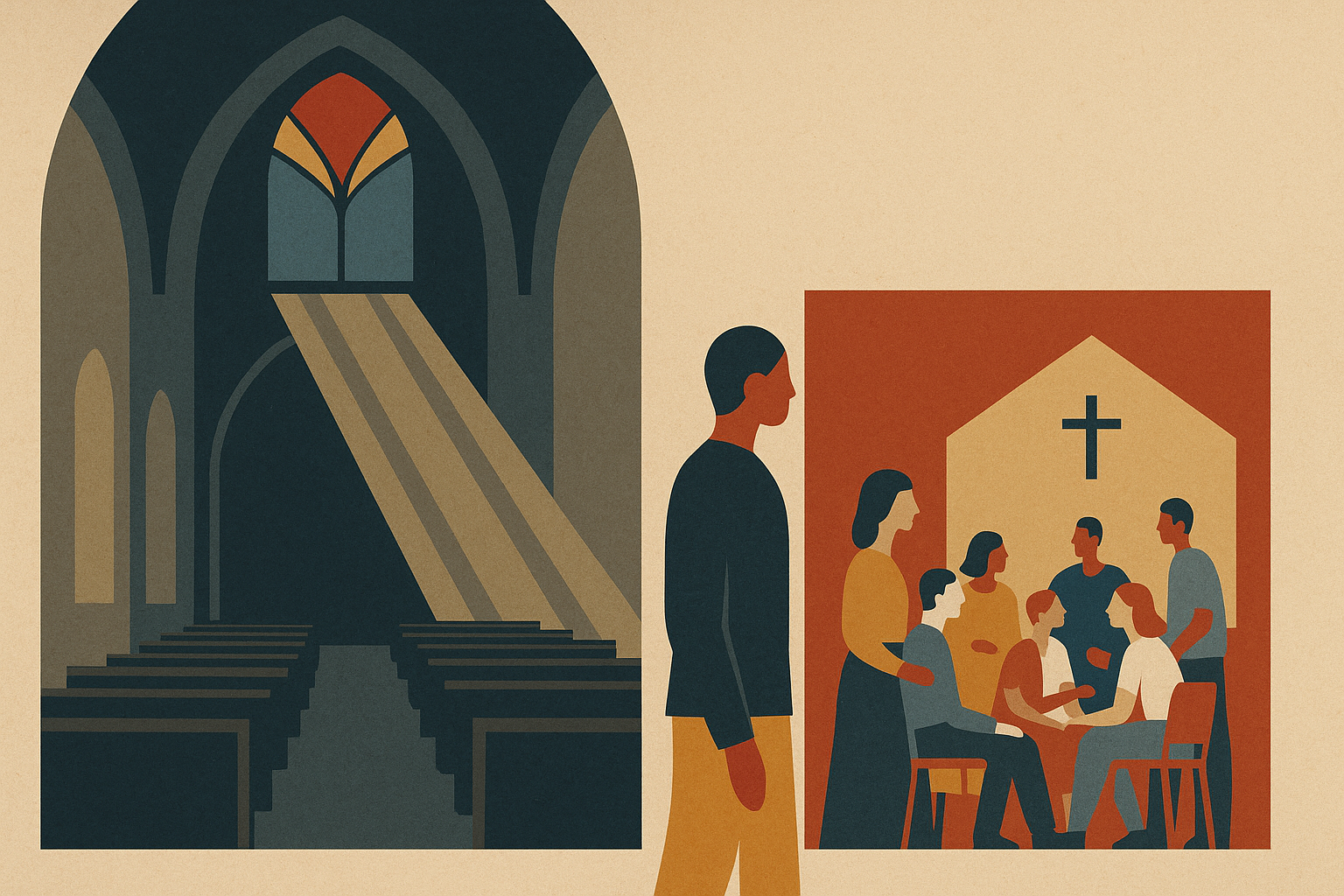
The Archdiocese of Detroit is considering ending Sunday Mass in up to 90 parishes. Paradoxically, Archbishop Weisenburger last year eliminated the Extraordinary Form Mass in 13 locations, known for attracting young people and families. Pierre-Antoine Vasseur analyzes what this decision reveals about the structural crisis of the Church in the United States.
The Fact
LifeSiteNews (June 23, 2026) reports that the Archdiocese of Detroit may discontinue Sunday Mass in up to 90 parishes due to a shortage of priests. Archbishop Weisenburger stated he wants "living parishes." However, the previous year, he had suppressed the Extraordinary Form of the Mass—the Tridentine Mass—in 13 diocesan sites, communities known for their appeal to young people and large families.
Our Analysis
The contradiction is striking. Data has been documented for years: communities attached to the Extraordinary Form of the Mass have, proportionally, more priestly vocations and larger families than the diocesan average. Suppressing these communities, then citing a lack of priests to close parishes, is cutting off the branch one is sitting on.
Canon law reminds us that the pastor is obliged to ensure the faithful are nourished by the celebration of the sacraments (CIC, can. 528 §2). The shortage of priests is real; it does not justify depriving communities of the Eucharist without exploring other solutions—particularly by calling on priests from traditional communities that the same archbishop himself has sidelined.
For Reflection
Christ promised to be with His Church "until the end of the age" (Matthew 28:20). Pastoral decisions that restrict access to Sunday Eucharist deserve serious—and public—examination.
90 parishes could lose their Sunday Mass. 13 traditional Mass sites suppressed in 2025 by the same archbishop. Communities attached to the Extraordinary Form proportionally account for more vocations and large families than the diocesan average in the United States. Source: LifeSiteNews, June 23, 2026.

Comments (4)
Sign in to join the discussion.

Léa75 25 Jun 2026 · 14:58
C’est vraiment décourageant de voir fermer des églises alors qu’on manque de lieux de prière. Et pourquoi supprimer la messe traditionnelle, qui ramène justement des jeunes et des familles ?

passionné_eco 25 Jun 2026 · 08:17
Fermer 90 églises le dimanche alors qu’on a viré les messes en latin qui marchaient bien, c’est comme scier la branche sur laquelle on est assis.

J.P.R. 24 Jun 2026 · 19:13
C’est à n’y rien comprendre : on ferme des messes là où les gens viennent encore, et on supprime celles qui attiraient du monde. Où est la cohérence ?

C.M. 24 Jun 2026 · 14:06
Fermer des églises où les gens venaient encore, et en plus supprimer la messe traditionnelle qui attirait du monde… C’est comme souffler sur les braises.
Story timeline
FSSPX : Léon XIV lance un dernier appel avant le 1er juillet
- 1FSSPX : Léon XIV lance un dernier appel avant le 1er juillet23/06/2026
- 2Traditionis Custodes au Kentucky : la blessure liturgique ne se referme pas23/06/2026
- 3FSSPX : la dernière ligne droite avant le 1er juillet23/06/2026
- 4L'homélie n'est pas laïque : Rome ferme la porte au Chemin synodal allemand23/06/2026
- 5Rome ferme la porte de l'homélie : la liturgie n'est pas une tribune ouverte24/06/2026
- 6Detroit : 90 paroisses sans messe dominicale, et l'archevêque supprime la messe traditionnelle24/06/2026
- 7L'homélie demeure réservée aux ministres ordonnés : Rome ferme définitivement la porte au Chemin synodal allemand24/06/2026
- 8FSSPX : une Déclaration de foi à Léon XIV, et la validité de la menace en question24/06/2026
- 9La FSSPX publie une profession de foi catholique : un geste de clarté avant le 1er juillet25/06/2026
- 10L'orientation de la messe : une question liturgique que Léon XIV n'a pas encore tranchée25/06/2026
- 11Père Nicola Bux au Pape : « Faites tout votre possible pour surmonter les différends avec la FSSPX »25/06/2026
- 12La menace d'excommunication du Cardinal Fernández contre la FSSPX est-elle canoniquement fondée ?25/06/2026
- 13FSSPX : un prêtre conteste la validité canonique de la menace d'excommunication du cardinal Fernandez25/06/2026
- 14FSSPX : une déclaration de foi adressée au Pape et aux cardinaux avant le consistoire25/06/2026
- 15Consistoire du 30 juin : les absences des cardinaux Zen, Erdő et Eijk, un signal que Rome ne peut ignorer25/06/2026
- 16Lettre ouverte à la FSSPX : des théologiens franciscains appellent au retour à l'unité26/06/2026
- 17Consistoire du 30 juin : l'absence de Zen, Erdo et Eijk, un signal que Rome ne peut minimiser26/06/2026
- 18Consistoire du 30 juin : Léon XIV ouvre la première session face à un monde blessé26/06/2026
- 19L'Église synodale sélectionne ses futurs prêtres : les jeunes hommes de Tradition sont-ils déjà exclus ?26/06/2026
- 20Sacres du 1er juillet : entre l'intransigeance canonique et la "souplesse" présumée du Vatican27/06/2026
- 21Consistoire J2 : Léon XIV et les cardinaux appellent à une "civilisation de l'amour" face aux blessures du monde27/06/2026
- 22Sacres du 1er juillet : le cardinal Müller trace la ligne entre tradition et rupture28/06/2026
- 23Léon XIV clôt le consistoire : synodalité, famille et appel universel à la paix28/06/2026
- 24Grech : « L'application du Synode ne sera pas une simple exécution de décisions »28/06/2026
- 25La veille des sacres : Müller, Conley et Léon XIV tracent la ligne29/06/2026
- 26À la veille du 1er juillet : dix prêtres ordonnés, Müller demande une commission - le compte à rebours FSSPX29/06/2026
- 27À la veille des sacres : la Messe traditionnelle, voie de réconciliation ?29/06/2026
- 28Burke tranche avant les sacres : « La situation actuelle ne constitue pas un état de nécessité »30/06/2026
- 29Léon XIV réforme le Vicariat de Rome : la synodalité au coeur de l'Église locale30/06/2026
- 30À la veille des sacres d'Écône : la lettre du Pape, Viganò et la clôture canonique de Burke30/06/2026
- 31Sacres d'Écône : J-0, Pagliarani demande du temps, Viganò dénonce un « jeu truqué »30/06/2026
- 32Sacres d'Ecône : le schisme consommé, Rome face à l'heure de vérité01/07/2026
- 33Après Écône : la FSSPX tend la main, Rome garde le silence01/07/2026